Practice Curiosity

December 4, 2020
  1. Practice being curious
  2. Forgive themselves
  3. Hold their emotions lightly
  4. Practice compassion
  5. Make peace with imperfection
  6. Embrace vulnerability
  7. Understand all things come and go

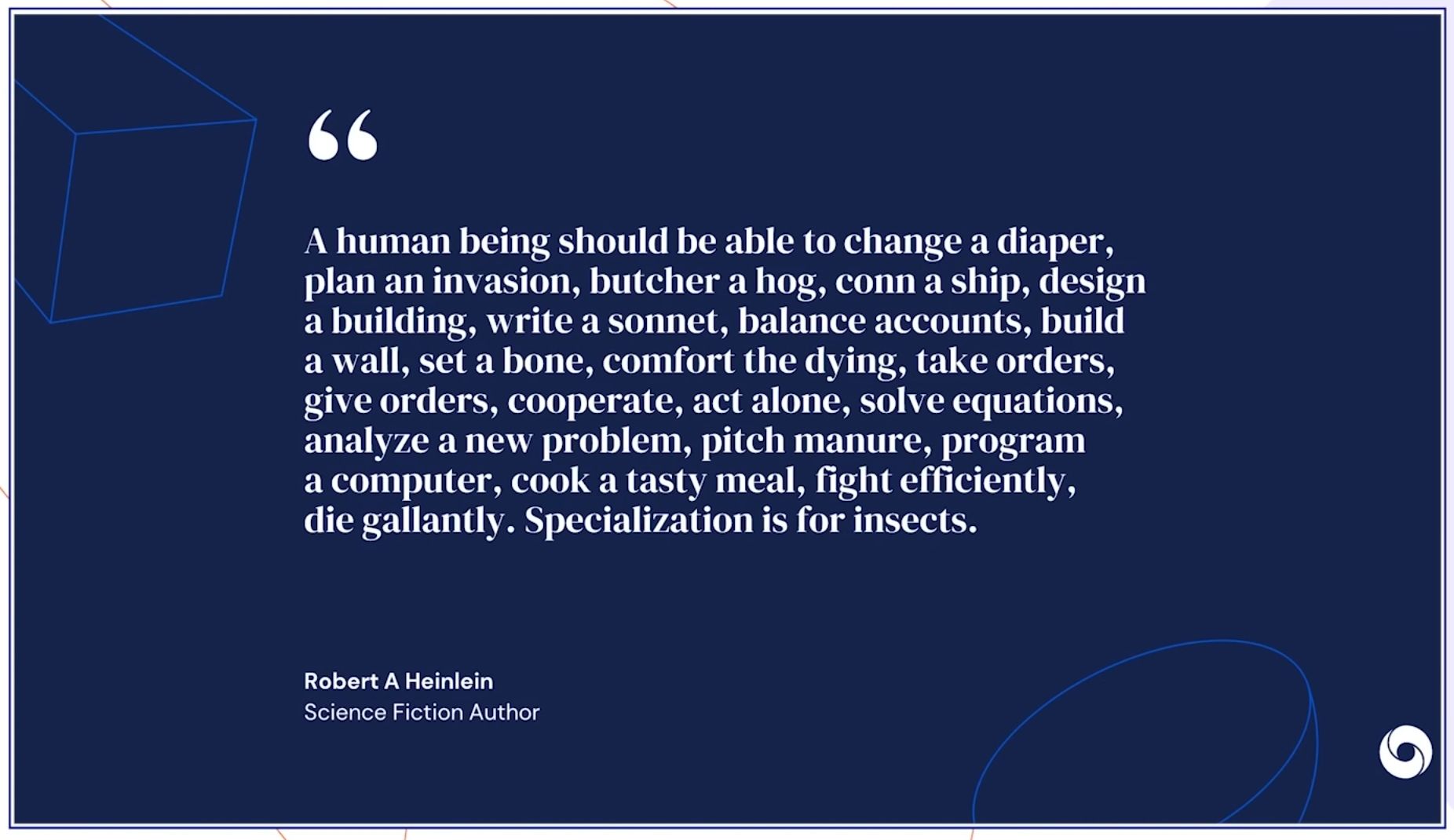
In my day as a child, a popular phrase murmured from mother to child was, “Curiosity killed the cat.”

For every child who enters the industrialized education system as a curious being, most exit as someone who has learned to memorize what the teacher expects and return it in the form of answers to The Test. Those of us who just wanted to learn because we were curious were either forced into the system or lived at the periphery.

I’m not criticizing teachers, many of whom say they want to encourage creativity. It is the system designed to prepare young people for a career as a cog in another system–first as industrial workers, then as “knowledge” workers.

Curiosity and imagination drive creative advances in science, technology, the arts. Those who buck the system and don’t mind how many of the cat’s nine lives they use up.

Mindful people practice being curious. We wonder all the time. I was curious about science things as a child. Then the curiosity settled in physics-types of things. Cars, especially engines. And electronics. Then guitars. Eventually curiosity about people leading to the study of psychology and then brain science. None of this had any relationship to school.

I got curious about spiritual writing and the people who experienced and wrote about it. And the Bible. And the historical times when the Bible was written.

To be honest, many of my brain cycles this week are devoted to curiosity about the impact of the large tech firms such as Microsoft, Amazon Web Services, Hewlett Packard Enterprise, Dell Technologies, and Hitachi Vantara on the incumbent manufacturers in the industrial control and automation world. I absorb information, then search the Web for articles and people who can answer questions. And I think about it.

Practicing curiosity is a lifestyle. More than a habit, it is a way of living developed over time. It is intentional.

Do you wonder about God? Writers in the Bible and other places use words describing brilliant white light when referring to God. What does that mean? How am I to interpret that? Can I also experience that?

Can we use quantum physics to approximate an image of God? I’ve tried. I’m curious. I wonder.

Christians are in the Advent season. What does it mean to me, to the world, to culture, that Jesus came? That would be something to be curious about for the rest of the month.

Curiosity may have killed the cat, but curiosity brings me to life.

A Mindful Advent

December 3, 2020

Advent, for Christians, is a season on the church calendar filled with traditions meant to prepare our hearts for the celebration of the coming of Jesus.

Advent, for many of the world’s cultures, is a season of bright decorations, selling and buying of gifts, and perhaps family gatherings–or the stresses of family gatherings as the case may be.

Most of this is done year after year. With busy-ness. With stress. With tradition without a thought about the meaning and development of those traditions.

I thought I’d spend a few sessions contemplating bringing mindfulness to the season.

Perhaps one at a time, we’ll explore the seven things mindful people do:

  1. Practice being curious
  2. Forgive themselves
  3. Hold their emotions lightly
  4. Practice compassion
  5. Make peace with imperfection
  6. Embrace vulnerability
  7. Understand all things come and go

Mindfulness requires a pause. We must pause what we are busy with, with our busy hands, our busy minds. Taking slow, easy breaths. We can lay, sit, stand, even walk mindfully. We gently bring our wandering minds back when we notice we’ve gone off. That’s OK. It’s the bringing back to awareness that is mindful.

Dwelling on Advent and Christmas in a pandemic with its loss of close family connections can add to stress. It is best to focus on the present moment and what we can do today with intention.

Known By Our Actions

December 2, 2020

When a referee is watching a challenge for the ball in soccer (football), she is not reading the mind of the players to judge intent. She watches actions. She can see where the players look and what they do. If a player glances back to see where the opponent’s head is and then jumps bringing back an elbow that “just happens to” hit the other player in the eye, we all know what that action was. A deliberate striking action. Not an accidental act.

We are in the Advent season. We may not be going to stores quite so often as usual, but we still hear messages and songs of peace and joy. We may receive greeting cards proclaiming peace and joy. We may see people on the streets and in the stores who may greet people with peace and joy greetings.

However, people not in your club, the Christian church club of choice, are not really listening to you. They are watching you like a hawk eyeing a field mouse. Intently. Do your actions belie your words?

Or perhaps some words slip out that betray inner conflicts. Perhaps words of condemnation, derision, racism, sexism, even hatred slip from between your lips undermining that earlier proclamation of peace and joy. Perhaps you pushed someone aside in the rush to grab that toy in the store. Perhaps you sounded your horn aggressively at someone in the parking lot while trying to butt in to a better parking place or to exit faster.

People watch. People know. They know you not by saying you’re a Christian, but by whether you act like one.

On the other hand, we do know that you can change your manner of thinking by how you act. You have choices. You can choose how to act.

In the words of that old Christian folk song, “They will know we are Christians by our love, by our love; they will know we are Christians by our love.”

We have the entire Advent season to change how we act so that our actions may be congruent with our words.

Waiting

December 1, 2020

I must write about waiting. The word has popped up several times in my reading over the past week.

Advent is about waiting, anticipation, and perhaps preparation.

A child waits (meaning anticipating gifts to come), but she does not wait with patience. Rather the patience is enforced. Leading some to give in. My wife had a tradition of opening one gift on Christmas Eve, not able to hold out 12 more hours.

Whenever I hear the word, I think of Samuel Beckett’s play, Waiting for Godot. Didi and Gogo engage in a number of discussions while waiting for Godot to arrive. He never does. The curtain falls while they are yet waiting. I suppose they are waiting yet today.

Some people are like Didi and Gogo. They wait for God to show up. In their minds God never shows. They are left in eternal waiting. Maybe they wait silently with inner pain. Maybe they are like Linus waiting for the Great Pumpkin and wait publicly only to suffer the derision of their peers.

My studies of the varieties of grace (one grace, many aspects) lead me to believe that often God is actually waiting for us. God laid out so many paths and hints and put so many experiences before us. Our job is to see and act.

That is spiritual formation. That is the reason for inculcating spiritual disciplines into our life continually.

It’s like a dance where the man and woman are at different tables, each waiting for the other to make the move, do something to reach out. In a 50s or 60s movie, some incident would happen, they’d make the connection, and everlasting romance would blossom.

God has made a move. The perceptive can see it. Perhaps we have it wrong. We aren’t supposed to wait. God is waiting. We are supposed to open our eyes to that and act.

[My link to the play goes to Wikipedia. That site is free to use, but there are many costs to maintaining it. Perhaps you could visit and leave some money there. I have donated for years. It is one of the best resources on the Web. Thank you.]

What Do We Love?

November 30, 2020

“Of course, there is great gain in godliness combined with contentment; for we brought nothing into the world, so thatd we can take nothing out of it; but if we have food and clothing, we will be content with these. But those who want to be rich fall into temptation and are trapped by many senseless and harmful desires that plunge people into ruin and destruction. For the love of money is a root of all kinds of evil, and in their eagerness to be rich some have wandered away from the faith and pierced themselves with many pains.”

1 Timothy 6

Yesterday for Americans, we left the season of gratitude. We entered Advent, the looking forward to Christmas—for many the season of “I want…”

I sympathize with businesses. I’ve spent a fair share of my business life trying to figure out how to increase sales and profits. But the way 140 years of experience have taught them the tools of manipulation of emotion blurs the lines of ethics.

And the target is not just kids. We target kids to bring them into the desire emotion with toy cars and their parents with a big luxury car with a bow in the driveway.

Look at Paul’s key words above—desires, love (of the wrong things), plunged (into ruin), wandered (from faith), pierced (with pains).

It’s about the heart. Is our heart set on the things of God? Is our heart set on objects of desire?

As we enter the Advent journey, let us maintain focus on what matters.

Gratitude Week

November 27, 2020

Many people are grateful for “Black Friday”. It has almost turned into a global phenomenon, although Thanksgiving on the fourth Thursday of November is an American holiday.

The grateful people, I imagine, are the business owners who depend upon Christmas present shopping (actually buying, not just shopping) to make their profits for the year. Don’t be cynical. I’ve been in business, and most of us rely on business for incomes.

But the ads began early. This morning I had emails from the most unlikely sources pushing Black Friday deals. Even my Website company!

I might suggest that you don’t instinctively just go online or to the big box retailer. Check out your locally owned shops for unique gifts. Or your local independent book seller for books and other supplies. You can find your local one if you don’t already know at Bookshop.

We can be grateful that we have the power and ability to make others grateful. Gratitude can spread just like love. It doesn’t diminish the more you use it.

Gratitude Affects Your Health

November 26, 2020

Years ago I was obsessing over a problem and read everything I could find on brain research. One thing I discovered is that we don’t only think with our brain. Our entire body joins in the fun.

The brain mainly operates on electrical connections. However a number of chemicals originate from various parts of the body that add information to the brain and the rest of the body. It all works together.

Gratitude, what we think or focus on, affects chemical reactions in a variety of areas of the body. Research reveals the health benefits of that gratitude mindset I talked about yesterday.

Your brain gets the benefit of hormones that make you feel good.

Your gut settles down and the various digestive systems operate better.

Your heart benefits from reduced tension.

And, your spiritual life finds additional space to grow.

Mind, body, spirit–all the parts of your self benefit.

This is Thanksgiving in the US. We won’t be meeting in large family groups, or even smaller family groups this year. Most likely community Thanksgiving dinners have been placed on pause. But we can still change our outlook to change our health by concentrating on those things for which we’re grateful.

Develop a Gratitude Mindset

November 25, 2020

Peter Diamandis is an interesting character. He’s an engineer and physician, founder of the X-Prize, and founder of the Singularity Institute. His passion is to develop an Abundance attitude in people in place of a scarcity mindset.

However, his recent newsletter included a portion of his class called Abundance 360 called developing a Gratitude Mindset. This seemed appropriate since we are discussing gratitude in this Thanksgiving week. Try these on for size.

With a Gratitude Mindset… 

(1) You know that being grateful enhances your mood and makes you feel genuinely happy. Expressing gratitude causes our brain to release dopamine and serotonin, the two crucial neurotransmitters responsible for our emotions. They make us feel “good.”

(2) You recognize how incredibly lucky you are on both a personal and professional basis, and you take the time to feel and express thankfulness and appreciation.

(3) As a leader, you understand the power of encouraging your team to be grateful. You know that being thankful and appreciative improves the relational well-being for both individuals and the overall group.

(4) You invest in relationships. As my dear friend Joe Polish says: “Time is not money. Relationships are money.” You have to develop and nurture your relationships. Every day, you try to be as useful as possible to those around you. And in your leadership role, you focus on what positive results you can create for others.

(5) You have created daily routines that allow you to reflect on how lucky and thankful you are. And you share those reflections with others in your life in a way that brings you joy, and uplifts those around you.

Gratitude For When I Choose Wisely

November 24, 2020

Did you ever find yourself in a place with certain people at an awkward time–and wonder what you were doing there?

The news is full of those stories–why did I choose to come here and now I’m in trouble?

Did you ever find your self out between midnight and 4 am? You’re with people who come up with a “bright idea”? And you wonder, “What am I doing here?”

Maybe I was given a partial gift–I can remember during the situation thinking that. Mostly when I was younger. I can’t remember many times when I thought that ahead of time.

However, certain disciplines and habits have kept me from those what am I doing here situations.

And for those, I am grateful.

As we approach America’s Thanksgiving celebration, we can pause daily to think back of things we did or didn’t do and find those for which we’re grateful.

Gratitude during Thanksgiving season leads us naturally to Advent (for the Christians among my readers). A season of preparation to celebrate the coming of Jesus. My virtual friend Jon Swanson has written an Advent book for this year, Giving a Year Meaning: A Healing Journal for Advent 2020. He makes me think–in a good way. You still have time to order and begin it.

Gratitude

November 23, 2020

This week Americans celebrate Thanksgiving. Celebrating a bountiful harvest in the late fall is probably as old as humans began farming. The beginning of our celebration is hidden by the mists of time.

Setting aside all the current arguments and discussions about the roles of the Europeans and Indigenous peoples in the 17th Century, we have been taught since I was a child that it’s a day to pause and give thanks for the many blessings we have.

Americans long ago began observing the holiday as family time. It’s an opportunity to pause and gather the extended family for a big meal and for renewing acquaintances and for telling family stories.

Later it became a good excuse to visit Florida and Disney World, but that’s another story.

This year, not so much gathering. The SARS-CoV-2 virus is spreading like a wildfire in California right now. There are people who thought there was no such thing, and even if so, they’d never catch it who are now suffering with the disease. Hospitals are full. Fear of spreading the virus farther across the family supersedes the will to gather.

We still can pause in the build up to Thanksgiving Day to reflect and be grateful:

  • For those of us who have not been infected
  • For those who received only a mild dose and have survived
  • For those who serve all those who have been infected
  • For a peaceful election despite the hype and build-up of media organizations that feed on fear and discontent to hook readers and sell advertising
  • For those who care