Archive for the ‘Leadership’ Category

Respect for Humanity

November 18, 2013

Some years ago, there was an executive of a major corporation who made himself (with the aid of some skilled public relations people and a couple of books) into a “god” for managers. He had only a couple of big ideas. One was that every manager should rank every employee on a bell curve and fire those who ranked in the bottom 10% regardless of their actual contribution.

Last week, another CEO of an American technology company was exposed of implementing that same philosophy at her company despite the fact that this management philosophy has now been long discredited and dropped by many of its former followers.

The first executive is Jack Welch of GE. He built a house of cards that took his successor several years to fix. Yet many people still extol his “virtues” even until this day.

The second is Marissa Mayer, CEO of Yahoo. She is trying to turn around a failing company. That is hard enough, but she also faces strong competitors and a shortage of skilled people. Seems like she would be better served by doing things to lead her people into greater performance.

Bell curves, as all of us who endured the education system know, inevitably force people to compete with one another. That is certainly not the way of modern, high-performance organizations.

Toyota has long held three principles as its core value: Customer First, Respect for Humanity, Eliminate Waste. Hmmm, Respect for Humanity. Think Mayer missed the plane when that idea went.

When Jesus came along (and you have to read the entire New Testament in this light), the main and only organization was Rome. Its CEO, if you will, was the King of Kings, Lord of Lords, Prince of Peace–Caesar. The only value Rome extolled was power. Life was all about who had power over whom.

Jesus turned the entire Roman world on its head. He reversed every Roman teaching and replaced it with Love first. He who would lead must be a servant.

Many of us in management roles have tried to live this one out. Obviously many have not. Even in Christian organizations, power seems to rule over humanity. And where God is in all that, I guess God only knows as the saying holds.

Thought for the day: How are we treating others?

Leadership and Vision

October 11, 2013

I’m reading in the book of Exodus for a while. Interesting stories. Familiar to many of us. Overall, it is the story about a leader. A leader who was reluctant to lead, but whom God convinced was the one man who had the talent and upbringing to be that leader. He grew into the role and became a great leader, the builder of a nation, and the builder of a religion.

He was Moses, of course. A great prophet in the sense that he spoke with God. He accepted God’s leadership and vision. He was to form the diverse tribes of Hebrews into one nation who worshiped the one true God.

From the text, I have to believe that the 400 years spent in Egypt, much of it as slaves, separated the majority of the people from true worship of God. Moses had to convince them in the desert that God was real. I think the detail about priests, garments, alter and so forth–remarkable that it was written and preserved–was basically a leadership method to instill the habit of worshiping God into future generations.

Moses had the vision from God, totally incorporated into his life, of leading the people into the land promised to Abraham centuries before. He overcame opposition to God from people who wanted a god they could see (the golden calf). He formed them into a structured society. He led them to the edge of the Promised Land.

But, he still could not instill in them the courage to take the land and believe that God could be trusted.

That was left to the next generation of leaders–primarily Joshua.

But think about Moses.

  • He had early training in leadership as a member of Pharaoh’s household
  • He served an apprenticeship under a God-fearing man
  • When God talked, he listened and obeyed
  • He remained focused on God and God’s vision for the people
  • He built new habits within the people who had left security–albeit one as slaves
  • He built a structured way for the people to remember God and to worship Him
  • He persisted for the remainder of his life

He remains a great example for us no matter what we’re leading. Grounded in the right motives, firm vision of the future, building the right habits among his followers, persisting until the end.

Leadership Example of Peter

September 25, 2013

Remember the first time you were thrust into a leadership role in your organization?

Did you feel prepared? Scared? Uncertain about the role of a leader?

It looks easy when you sit back and criticize other leaders. But to actually do it yourself…that’s quite another thing.

Or maybe it’s the first time you gave someone a leadership position for their first time. Did you feel you prepared the person? Did you wonder if they were ready?

I think often about the insight of Jesus and the growth of Peter. Jesus gathered twelve close followers in order to give them special training so that his movement would survive his death. The twelve were all talented, but they had different skills.

Jesus looked at Peter and saw the courage and personality of a future leader. But he also saw the rough edges. There was a sort of double meaning when Jesus told Simon that he was “Peter” (rock) the foundation of the movement. But this was the first indication of what Jesus saw special in him.

But still, Peter was unprepared for the events that would thrust him into the position. With John as his intellectual partner who could keep the theology straight, Peter was the man of action. It probably took him three months to digest the new reality of life after Jesus. But then he started preaching, healing, arguing.

And he grew into a great leader.

I love that example that we don’t just become great leaders overnight. It takes years of preparation and testing. It takes reflecting on what we’re doing as we do the work of leadership. We, too, can be like Peter and grow into leadership in whatever situation of life we find ourselves.

Reflect on Peter’s growth and overcome discouragement. Continue onward and grow you future leaders.

Being Rewarded Without Showing Loyalty

September 9, 2013

“The loyalty program that doesn’t require loyalty.”

I don’t watch much TV. Sunday Masterpiece Mystery. Occasional Diners, Drive Ins and Dives. Maybe Sunday afternoon soccer. But I entered Saturday TV wasteland last weekend watching part of a college football game. My attention was jarred by this hotels.com ad. Wow, this fits it all, I think, this Age of Narcissism.

You get all the benefits without the commitment.

Is your church this way? Your business? Your non-profit organization. What’s that old Dire Straits song, “Money for nothin'”? In addition to a great guitar line, the song really rips into people who think it’s all easy.

Luke writes about a time Jesus was walking along a road and meets several people (end of Chapter 9):

As they were going along the road, someone said to him, “I will follow you wherever you go.” And Jesus said to him, “Foxes have holes, and birds of the air have nests, but the Son of Man has nowhere to lay his head.”

To another he said, “Follow me.” But he said, “Lord, first let me go and bury my father.” But Jesus said to him, “Let the dead bury their own dead; but as for you, go and proclaim the kingdom of God.”

Another said, “I will follow you, Lord, but let me first say farewell to those at my home.” Jesus said to him, “No one who puts a hand to the plow and looks back is fit for the kingdom of God.”

Looking at these thoughts from the point of view of a leader, I want only those people who are committed to the cause. Of course, like Jesus we as leaders need to define the cause and make it compelling for our followers. But we need followers who are committed.

Looking at this from the point of view of an individual, I need to make the commitment. It’s not all about me. There’s no loyalty reward in life where I don’t have loyalty. As you sow, so shall you reap. The decisions you make today determine what will happen to you tomorrow.

What is your level of commitment?

Set Free The Oppressed

September 2, 2013

We are  observing a holiday in the USA. Labor Day. It’s a day set aside to remember the contributions of laboring people.

The concept and definition of “labor” changed dramatically over the course of the 20th century. The labor movement actually began in the mid-19th century. Originally the term referred to workers in manufacturing. These people were often almost slave labor for the factory owners. Various labor movements sprung up to organize workers. Much of the language used by unions today is derived from the early struggles.

By the end of the 20th century, engineers and managers, sometimes at the prodding of government regulators, had removed most of the hazards of working in plants. By the mid-20th century, factory workers could earn a middle-class income–although that changed beginning in the 1980s as relative wages plummeted due to many factors. But it’s still possible to earn a middle class income as a skilled technician and operator in a plant or factory today.

Management trends, such as the adoption of Lean which puts focus on the value of the individual, have also helped improve the situation for labor.

Oppression

Very early in the growth of manufacturing developed a “white hat” versus “black hat” mentality by people involved. Of course, who wore the “white” had and who the “black” depended on your point of view.

All this is not new, of course. Check out Isaiah 58–my current text for study and meditation.

God tells the people through Isaiah to set the oppressed free.

Is this not the fast (Spiritual Discipline) that I choose:

to loose the bonds of injustice,

to undo the thongs of the yoke,

to let the oppressed to free,

and to break every yoke?

If you are a business owner or manager, you will find it morally, ethically and financially rewarding to treat all the people in the company fairly. Treat them as fellow human beings who are children of God.

Since I have worked both as labor and management, I have trouble with the “black hat” / “white hat” way of thinking. I most often think in shades of gray. Some people are more trustworthy than others; but all people are worthy of my respect to the degree that their character demands it. For me, it is not us versus them, but rather “we.”

To Let The Oppressed Go Free

August 26, 2013

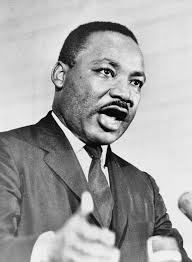
Martin Luther King, Jr. speaking out for freedom.“Is this not the fast I choose: to loose the bonds of injustice, to undo the thongs of the yoke, to let the oppressed go free, and to break every yoke?”

I’m studying Isaiah 58 right now. These are the words of the Lord spoken through his prophet. (That’s what prophets do, you know.)

This week is the 50th anniversary of the March on Washington where Martin Luther King, Jr., caught up in the Spirit, deviated somewhat from his prepared text and spoke about his dream. A dream where people were judged on character, not on skin color.

I was only a kid, living in a small village where everyone was either of German or Irish descent (read “white”)–well, except for one “hillbilly” family that moved in, and they were white. I never knew a black person until I was in college.

But for some reason, I was haunted by images of Ku Klux Klan cross burnings and murders. I can still remember nightmares that there was a local branch (don’t think there ever was–we didn’t have black people, but we did have a secret society of which my dad was a member called the Masons). I feared that they found out that I was pro civil rights and surrounded our house.

Later while I was in college, I endured much teasing about my civil rights stance (I still lived in town and drove 40 miles each way to college to save money since I was now mostly paying my own way). I remember driving through Mississippi to Louisiana in 1970 when I entered graduate school at LSU. Had an equal rights decal on my car. Arrived and then had the thought, what if my car had stopped in the piney woods? Still, I’m white. Not as bad as if I were not.

Progress toward freedom

There has been a lot of progress over the last 50 years. Like all human social change, there were cycles of success and cycles of regress. Many things are better for people of different colors, ethnicities, even gender. Many people have been set free. The leadership of Christians was an example to me that maybe the Christian church wasn’t all bad.

But we still have far to go.

Jesus understood. As have many spiritual people throughout human history. That passage from Isaiah is probably 2,800 years old. Yet, until we all change our hearts and begin to truly worship the one God, then we will not have the justice God demanded so long ago.

Getting Things Done and Keeping My Sanity

August 21, 2013

Getting Things DoneThis time of year is always the busiest and most hectic for me. In business, I’m gearing up for the fall travel season plus planning for the next year.

I’m very involved with soccer and have been the referee assignor for 25 years. Practice for teams start at the beginning of August. I have almost all my games assigned for the year by then. Suddenly plans change. Referees drop games. Schools add games. I just went from needing to fill only 6 games to 21 games in the past three days. (OK, to my friends in Toledo, Columbus and Dayton, only 21 games is almost heaven, I know.)

I try to research and find topics 4-5 days a week for this blog. I have a business blog–The Manufacturing Connection–from which I derive a little income. I have several writing gigs.

Not to mention a new ministry leadership position in the church.

Getting Things Done

At times the workload seems overwhelming.

Then I take a deep breath. Maybe a walk around the block. Then tackle the list one thing at a time. Soon, I’m back in control, and much work gets accomplished.

I follow David Allen’s Getting Things Done (GTD). And I use a Web-based application called Nozbe to help follow the methodology.

This approach of living only in the present (that is, not worrying about tomorrow–see Jesus for advice); taking a few deep breaths to relax, then tackling the to-do list from most important (not urgent!) down, is how I’ve survived over the years. Try it.

Dare To Communicate Clearly

August 16, 2013
Old Church Leadership Style

Leadership

Jesus spoke directly and clearly when he was speaking directly to an individual. Even his parables were clear when you figured out the key. The biggest problem with his message to his listeners was that it was so radical it took time to soak in.

Donald Miller wrote several books I admire. Yesterday, he wrote about being clear. Referring to a poetry reading by former Poet Laureate Billy Collins, Miller writes, “How can any of us get what we want in life if we don’t communicate what we want clearly? Billy Collins might as well have been echoing the words of Jesus: Ask and it will be given to you.”

He says later in the essay, “Everybody kind of knows what they want, but few people have taken the time to reflect so they can communicate in such a way people understand. Most leaders kind of know where they want to take people but revolutionary leaders say it clearly.”

Ah, here is a key–take the time to reflect. Don’t short circuit the path from thought to mouth. Actually think about what you want and where you want to go. Victoria Elizabeth wrote recently on a Website called Problogger that we should blog like Hemingway. Use short sentences and research the truth. There’s more, check it out if you’re a writer or leader.

Miller says this process of thinking and speaking clearly is especially important for leaders. “The reality of leadership is this: The world is standing before you, curious, asking where you’d like to take them. If you kind of have an answer, they’ll follow somebody else. If you want to be a leader, communicate clearly because that’s the only way anybody can know whether or not they want to join you.”

This is important for leaders. And for all of us trying to communicate the Gospel. Think things through. Find the truth. Use simple sentences. And, “Know where you want to take people and ask them to come with you. Then, confidently take them there.”

Avoid Confusion and Distraction

August 14, 2013

BikepathI’m reviewing my notes from Henry Cloud’s Boundaries for Leaders for something else I’m writing and these words attracted my attention. “Set limits on confusion and distraction.”

In this book, he meant that organizationally. As you organize your company, department, ministry, family, assign tasks and responsibilities and hold everyone accountable for their actions and results.

Assigning your children tasks to help around the house at an early age with no thought of pay teaches them responsibility, accountability, and focus. These are life skills that will help them throughout their lives no matter what happens. My capitalist friends may cringe–thinking that everything must have a monetary reward–but they would need to calm down a little. Even economists will occasionally talk about intrinsic rewards.

Do you lead a group in either a marketplace company, a nonprofit agency, a church or volunteer organization? Think on these things. Think about each person–their tasks, responsibilities and desired results. Clearly state to them, ask for response that these are understood. Keep people focused on what is important.

This works for yourself, too.

What about you or around you contributes to confusion and distraction?

  • Not sure about your goals
  • Messy desk
  • Sloppy recordkeeping
  • Too much social media
  • Thinking you’re the exception to multi-tasking blues
  • Too many goals
  • Inability to say “No”

Now is the time to work on your own confusion. Eliminate distractions when you think or work. Organize your workspace. Organize your house. Organize your daily routine.

I often talk about Spiritual Disciplines (or practices). Adopt a couple of crucial ones. Every morning get up 15 minutes earlier than now so that you can spend time reading The Bible or other Spiritual book. Then spend some quiet time in prayer and meditation–even if it’s only 5 minutes.

Begin your days focused and organized.

You Get What You Create or What You Allow

August 1, 2013

I’ve been contemplating on Henry Cloud’s latest book, Boundaries for Leaders. There is a lot of research in that book. And a lot of wisdom.

At one point, he says, “Leaders will get a combination of what they create and what they allow.”

I thought, wow, this applies in so many areas.

Take raising children. Do we create an environment and expectations for them to grow and succeed? Or, do we allow them to do whatever whim comes along? Or, a combination–we create certain structures and allow other things?

Leaders in organizations do this. Same types of questions. Do we create an environment, expectations and structures for people (and the organization) to grow and succeed? Or, do we permit too much such that vision is lost, ethics are cast aside, and the whole organization crashes?

What about our personal life? We lead in that, too–I hope. Do we create structures and expectations in our own lives such that we grow and succeed? We have access to writings on the Spiritual Disciplines. These have been thought out and written so that we have a guide toward establishing the proper Spiritual structure in our daily lives so that we continue to grow in Spiritual maturity.

Attention is key

Then Cloud hits on one of my pet ideas–attention. “Brain researchers say that ‘attention’ is like a magic key that unlocks higher-order brain circuitry. ”

We must place our attention on the things we wish to create in our leadership and our lives. Then we do things with intention, that is, on purpose. Consciously. Things don’t “just happen.” We cause things to happen and construct structures to create opportunities to succeed.

By the way, the link to Amazon is not an affiliate link. I recommend so many books, I probably should sign up for affiliate status. I bet I could add $10 or so to my income 😉 And I certainly recommend this book. And if you’ve never read Cloud, try his other books. They are all excellent.