Author Archive

Forcing People Into Categories

February 10, 2020

Software designed to help management run businesses usually forces the company to change to fit it. Rather than assisting people operating the organization it forces workflows and the way to operate as designed by some geek in a cubicle hacking computer code.

Politician can be that way. They have a theory and fit facts and people into categories according to that theory. Everything becomes a battle where I’m trying to get my theory triumphant (in whatever sense) over your theory.

Christians can also be that way. We have a theory and derive rules from that theory. We expect people to agree with the theory and to completely follow the rules we have constructed. And, woe to those who disagree or slip in the following of a rule. They will be cast into hell where we Christians can joyfully sing “I told you so.”

But, there exist followers of Jesus who try to live out the harder commandment. “Love God with all your heart, mind, soul, and strength. And your neighbor as yourself.”

We don’t have rules. We have “The Way” as the first followers were called. And that way means we don’t try to force people into molds and then judge them according to the mold. No, each person is a child of God. And we treat them as such. Offering to help them along the way.

Jon Swanson comes up with some of the most intriguing and challenging ways to serve. Follow the link to some practical yet fascinating ways to “fast”—or better said, to Love our neighbor. I wish I had the courage to try out his ideas.
Tranquility

February 7, 2020

Among the important traits of a leader, stability ranks with clear vision and effective communication.

Ricochet Rabbit served as sheriff in a cartoon parody of the American Wild West. He earned the name “ricochet” because his hyperactivity had him bouncing off the walls–literally, it was a cartoon, after all.

I had a boss like that once. Nice guy, but I never knew where he would be coming from when he walked into my office. Yesterday’s project was forgotten. On to new things today, only to be replaced tomorrow by another idea.

We find ourselves at times like that. Our mind resembles a group of squirrels scrounging for seeds.

“We must try to keep the mind in tranquility. Our mind when distracted by countless worldly cares cannot focus itself distinctly on the truth,” said St. Basil the Great.

David Allen, the master productivity guru wrote in Getting Things Done the importance of having a “mind like water.” That is a mind that absorbs a shock, the ripples start out but smooth out into stillness once again so that we may focus.

Take a deep breath, slowly exhale, allow the mind to settle back into a state of tranquility. Then we may perceive the truth. And make better decisions.

Awakening

February 6, 2020

I was meditating on the spiritual experience of awakening. That moment when inspiration and awareness arrive in an instance–after sometimes years of discipline.

This was early yesterday. The third day consecutively where I rose from bed with about two hours less sleep than normal. These conferences can sometimes be physically, as well as intellectually, tiring. When I’m walking the mile-and-a-half from my hotel to the conference location after perhaps six hours of sleep rather than my regular 7.5+ or meeting my 6:30 am Lyft driver to the airport, awakening is on my consciousness.

I was going to write this yesterday on the early plane. I was upgraded to first class. The seat was wide and comfortable. I dozed off. Missed the first-class free breakfast, although I had grabbed a quick bowl of oatmeal and a slice of toast at the United Club before the flight.

I also missed reading and writing while sleeping most of the way from Orlando to Chicago.

What a metaphor for how sometimes we sleepwalk through life. One day after another. Not paying attention to our surroundings or other people. No awareness that the spiritual presence of God surrounds us and infuses us.

Just asleep.

And then we awaken. And it’s great to be alive.

Cooperation

February 4, 2020

This is one of those weeks. Flew to Orlando late Sunday. Up early Monday and met with at least 20 people spending most of the day sitting. Dinner with a group from 7-10. Back to the hotel room (I am staying about a 25-minute walk from the conference hotel, so I get some exercise). In bed after 11. Up at 5:30 to get ready, walk to the conference hotel, and then sit through an hour of breakfast and company presentations.

Now I’m sitting through the keynote presentations. Usually theoretical and boring. But today the leader of the Information Technology group and the leader of the Operations and Manufacturing group from Dow spoke about working together in order for the corporation to meet its goals.

These two organizations typically do not like each other. Each things of the other as a roadblock to good organization. Each thinks the other doesn’t understand their needs and expertise. (Actually, there is truth to that.)

No matter what sort of organization you work at, you’ve no doubt seen where bickering and misunderstanding between different groups leads to a dysfunctional organization. Without strong leadership from the top, the organization, whether for-profit or not-for-profit, will not serve its customers and investors and will ultimately fail.

The point was that these two executives shared the story about how the two organizations broke down the barriers between them and worked together to achieve the corporate goals.

The “secret sauce”? Communication. Try it in your organization.

A Book of Rules—Not

February 3, 2020

“I don’t understand how anyone can argue about it. Here it is in black and white,” moaned a guy at a Bible study who had just lifted a few words from a sentence of a letter from Paul the Apostle which was compiled together with other writings as part of the teaching document of the new movement called by some Christians.

He was, of course, reading it in English translation from Ancient Greek totally in the context of his own political beliefs.

Has this been done before?

Of course. Anyone who has read widely in the literature of the past 2,000 years has seen attempts at lifting phrases and making an entire theology or political philosophy from them.

But actually understanding the text takes considerably more work and thought than that.

St. Augustine taught us that not reading the New Testament in the light of Jesus two commands to love God and to love our neighbor brings the reader to error.

NT Wright has written “If you try to read the New Testament as a ‘how-to’ book, which sadly is how some people approach it, you may end up frustrated, thinking it would be better if the spirit had given us something more like a car manual or railway time table.”

It is so tempting to read the New Testament with an eye toward discovering how we are good and they are bad. But that would be an injustice both to the writers and to the they.

We Must Keep Growing

January 31, 2020

My reading today came together around the theme of growth.

The notes on a book on leadership I read a couple of months ago, Reboot, pointed out from the writer’s bitter experience that a leader’s failure to grow leads directly to failure as a leader.

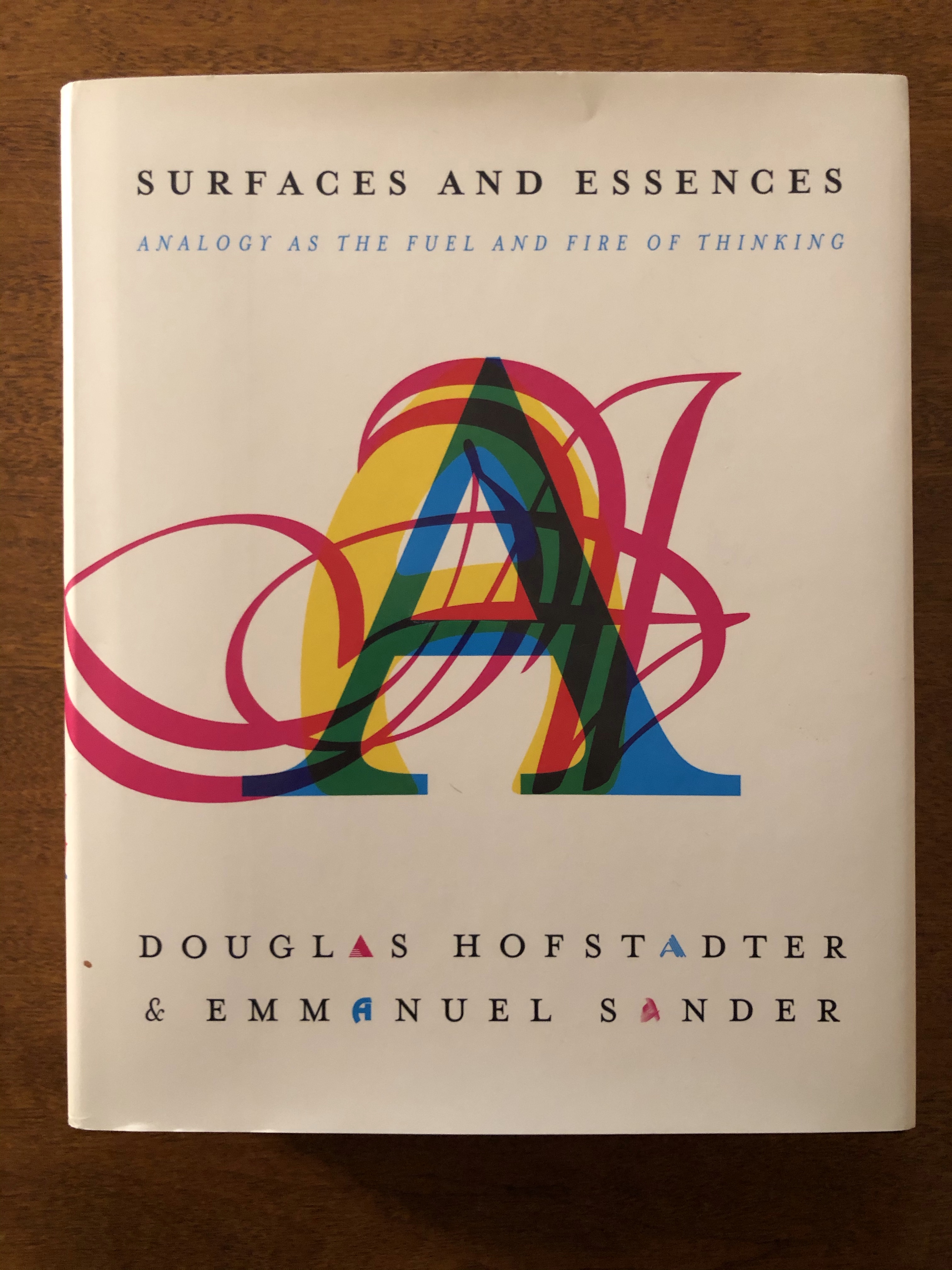
From the book I just finished, Surfaces and Essences, the great mathematician Henri Poincare said of Albert Einstein what was most admired was Einstein’s ability to take in new ideas, consider them, and then incorporate them into another place in a wholly creative way.

God teaches us when we observe nature that that which ceases to grow begins to die.

The problem when we take personality profile we can think it is a static score. The Myers-Briggs gives you a type. We can think we are locked in to that type. (As in, I am an FJ, so I can’t grow and be open to new ideas.)

If one does the Enneagram correctly, it becomes a pathway to growth. We look at the positive side and the ways in which that personality has negative connotations. Then we work to become more integrated.

At any rate, if we are getting older and still holding on to our 10-year-old’s view of the world and faith, then our discipline is lacking. Study, prayer, and meditation will help us grow up.

Not Everyone Who Calls Me Lord

January 30, 2020

Every week, if not daily, we hear about an eminent teacher, leader, or preacher of the Bible being outed for a (somewhat) secret life of sin, abuse, sex, pride. Not the ordinary failings of the rest of us, but a willful, continuing pattern. And when they are finally brought out into public view? They disappear. No repentance. No apologies.

This is not a 21st Century phenomenon. No, John the Baptizer and Jesus the Son of Man both appeared in 1st Century Palestine with a central word–repent. That’s an old-fashioned word, but it contains a contemporary meaning.

Recognize your failings. The damage you’ve done to many lives. The trust you’ve broken. And change your life.

Both John and Jesus made a consistent point of highlighting the publicly religious people of their time and calling out their hypocrisy. How they call out to their God, “Lord, Lord” but their actions belie their hearts.

No wonder Jesus said (recorded in Matthew 7):

Not everyone who says to me, ‘Lord, Lord,’ will enter the kingdom of heaven, but only the one who does the will of my Father who is in heaven.

When you go out to the coffee house, how do you treat the barista who serves you? Or the server at lunch or dinner? Or the plumber who comes to do the dirty work of keeping your house in order?

This week I called the cable TV company and cancelled TV service. Yes, my wife and I are now officially “cord cutters”. The man on the other end of the conversations was having some computer problems. He kept apologizing for the delay. I kept saying, “No problem, do your job and I’ll occupy my time reading and writing while I’m waiting.” He told me at one point, “Thank you so much for your patience. Not everyone is that way.” I told him that I understood and to have a nice day–in a job, by the way, that is most thankless.

I say that merely as an example. Maybe not always am I that kind. But I try. And so should you.

Because, as a Jesus-follower we try to live with the understanding that God cares not so much about what we say as how we act. I read a commentary preparing these thoughts where the preacher (I suppose) said that we should “leave a trail of good works.”

This is not a works versus faith argument. The proof lies in the status of your heart. What we do betrays the state of our heart. Is it of the light or of the darkness/

The Spiritual Discipline of Thinking

January 29, 2020

I just finished a rather big (530 pages), but readable, book on thinking–Surfaces and Essences: Analogy As The Fuel and Fire of Thinking.

Don’t let the size scare you off. It is quite an enjoyable read packed with everyday examples and ending with the fascinating examples of mathematicians pursuit of solving quadratic equations (don’t worry if you’ve forgotten all about them, it’s not a re-hash of high school algebra) and the development of Einstein’s thinking as he came up with his many theories that explained gravitation and mass-energy unity.

Analogy is the selective exploitation of past experiences to shed light on new and unfamiliar things belonging to another domain. Analogy-making is the lifeblood of cognition. It is also is the wellspring of creativity. As they explore analogy making, they touch on the education establishment’s tendency to believe in teaching things–especially science and math–with formal logic rather than analogy. This latter is ironic because so many advances in math are accomplished through analogy and not through formal logic.

Some church denominations have a foundation of tradition and the Bible. Some say “only the Bible.” As I have wandered from church to church in my life, many years ago I made a (to me) remarkable discovery. Even the churches that are one way or another tied to the Reformed Bible-only view have traditions. Go figure.

This book’s summary of research and story of stories added to my knowledge and experience about how importance of story over lists of facts. Even in science and technology. Partly because sometimes what we take as facts really aren’t.

This insight includes Bible study where we err if we think it’s all about learning a list of things–perhaps a list of rules.

I have begun NT Wright and Michael Bird’s 980+ page 4.5-lb. “summary” of Wright’s scholarship to date The New Testament in its World. They write in the introductory chapter, “If you try to read [the New Testament] as a ‘how-to’ book, which sadly is how some people approach it, you may end up frustrated, thinking it would have been better if the spirit had given us something more like a car manual or railway time table. No: the New Testament is designed to draw us into the story of God’s plan, to rescue the world from chaos and idolatry and to launch his new transformative creation…This rescue and this launch have happened in Jesus.”

Sounds as if they had read Surfaces and Essences before it was written!

Go dive into the story. It’s fascinating…and life-changing.

I Am Imperfect

January 28, 2020

Sometimes I awaken around 4:30 or 5:00 and lie in corpse pose (from Yoga) for 30 to 60 minutes meditating. Then I rise, refreshed, to begin the day at 5:30.

This morning the question was framed, tell me about myself. Then I saw a hand writing “Imperfect.”

True, I thought–and then my meditation went off in other directions.

But, I thought, how profound.

How many of us go around pointing to someone else’s imperfections? And we do it as if we ourselves are perfect.

How many of us parse through a list of sins only to conclude that our own sins, if indeed we actually have any, are so very minor compared to sins of someone else?

How many of us build entire theologies around the particular “sin” we have identified as worse than others and organized them out of the club?

How profound the old saying, “when you point at someone, there are three fingers pointing back at you.” Yes, we probably have three times the failings of the one we are singling out.

Some time spent in prayer of confession before encountering others would be time well spent. Then maybe we could be as accepting as the one many claim to follow, but for which there is scant evidence.

As for me…I remain imperfect.

Wisdom—Being and Doing

January 27, 2020

There are four types of people revealed in the Hebrew book of Proverbs. There are the simple, the scorner, the fool, and the wise.

The simple live the unexamined life. Maybe they could be taught.

The scorner knows it all, is sometimes evil, might as well be ignored. Stay away from them.

The fool thinks he knows it all, but knows nothing. Teaching is wasted on them. We see this type often. But they don’t know it.

The wise are always learning. They are open to God’s leading.

But, sometimes people who have wisdom are not aware of how much they have. They are asleep. They must be awakened.

Some people know all the wisdom sayings, maybe even write them, but living wisely escapes them. Example–Solomon, who reputedly wrote that book of Proverbs, yet he lived unwisely and failed to bring up his son properly. That son caused the kingdom to split. So, even though seemingly wise, Solomon and his son exemplify fools in their lives.

Blessed is the person who knows wisdom and strives to practice it with every breath. I think that the story of Jesus and the scribe in discussion in the Temple during Jesus’ last week shows this. The scribe knew all the right answers and Jesus evidently perceived in his soul the longing to do right. Jesus told him he was not far from the kingdom of God.

Nassim Nicholas Taleb wrote a section in his book Skin in the Game entitled Intellectuals are Idiots. That is his typical blunt hyperbole. But haven’t we all met people who memorize well and perceive and live poorly?