Posts Tagged ‘Love’

Debating Society or Living in Love

January 24, 2014

A teacher recently explained something of the difference between the Reformed view of Scripture and the Dispensationalist view. I found it interesting to learn that I was closer to the Reformed view than I’d have expected.

The Reformed strain begins with Luther, then Calvin and others of the 16th and 17th Century. The Dispensationalists (precursors of much of today’s “fundamentalists”) originated in the 19th Century.

By the way, these are Protestant strains of thought. There are other theologies alive in the Catholic and Orthodox traditions. I say that lest we think that we’ve discovered the one true way through some philosopher.

I’ve always found it instructive to read the earliest sources and tend to find writings that seek to explain the “secrets” of the Bible to be less than instructive.

To me, the Bible exists to show us how to live our lives in relationship with God. What would our lives look like if we did so.

I thought about this in relationship to theology and organized religion. I realized that over the course of the past 35 years or so, I’ve spent very little time thinking about religion. I used to subscribe to theology journals, but found the playing of mind games merely entertaining–not instructive.

There was a song that appeared in the mid-late 60s I think co-written by Paul Stookey of the folk music group Peter, Paul and Mary (and I’ve forgotten the title), that starts “Sunday morning very bright, I read your book by colored light that came in through the pretty window picture.” It’s about a person who shows up in church at times but finds it not nourishing. In one verse, he says they passed a plate and I just had time to write note that said “I believe in You.”

Jesus said we’d know his followers by their love. Sometimes I wonder if we’ve forgotten that simple description in our quest for theological purity (of a philosophy developed 1600 or 1900 years after Jesus) or doctrinal argument or unlocking the “secrets” of the Bible.

What have we done to show love today? It’s just that simple. And that hard.
You Will Know My Followers By Their Love

January 16, 2014

I’m continuing my posts from the Tijuana Christian Mission. This is our last day. We’re flying home overnight, so back to work Friday afternoon.

What an amazing testimony to God’s love at work. These Jesus followers serve some of the poorest of the poor, the abused, the neglected. There is no false sentimentality, likewise no finger-pointing. Just sharing God’s love with a sandwich and a Bible lesson. A shelter for abused women. Orphanages for abandoned children. A hospice for lost people.

I’ve traveled and seen many things. But I’ve never been taken into an alley packed with people who have little hope, many the only hope they have comes through a needle. But appreciative to Christ-followers who share.

Jesus said, you will know my followers by their love.

Sometimes I wonder about some who claim his name, yet fail so much to love others.

When you see these illnesses of society, you realize how much work there is to be done.

I’ve seen changed hearts and changed lives. We need many more.

Respect for Humanity

November 18, 2013

Some years ago, there was an executive of a major corporation who made himself (with the aid of some skilled public relations people and a couple of books) into a “god” for managers. He had only a couple of big ideas. One was that every manager should rank every employee on a bell curve and fire those who ranked in the bottom 10% regardless of their actual contribution.

Last week, another CEO of an American technology company was exposed of implementing that same philosophy at her company despite the fact that this management philosophy has now been long discredited and dropped by many of its former followers.

The first executive is Jack Welch of GE. He built a house of cards that took his successor several years to fix. Yet many people still extol his “virtues” even until this day.

The second is Marissa Mayer, CEO of Yahoo. She is trying to turn around a failing company. That is hard enough, but she also faces strong competitors and a shortage of skilled people. Seems like she would be better served by doing things to lead her people into greater performance.

Bell curves, as all of us who endured the education system know, inevitably force people to compete with one another. That is certainly not the way of modern, high-performance organizations.

Toyota has long held three principles as its core value: Customer First, Respect for Humanity, Eliminate Waste. Hmmm, Respect for Humanity. Think Mayer missed the plane when that idea went.

When Jesus came along (and you have to read the entire New Testament in this light), the main and only organization was Rome. Its CEO, if you will, was the King of Kings, Lord of Lords, Prince of Peace–Caesar. The only value Rome extolled was power. Life was all about who had power over whom.

Jesus turned the entire Roman world on its head. He reversed every Roman teaching and replaced it with Love first. He who would lead must be a servant.

Many of us in management roles have tried to live this one out. Obviously many have not. Even in Christian organizations, power seems to rule over humanity. And where God is in all that, I guess God only knows as the saying holds.

Thought for the day: How are we treating others?

Lost That Loving Feeling

August 12, 2013
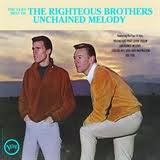
Bill Medley and Bobby Hatfield, The Righteous Brothers

Bill Medley and Bobby Hatfield, The Righteous Brothers

The powerful voices of Bill Medley and Bobby Hatfield, The Righteous Brothers, pound in my brain. “You’ve lost that lovin’ feeling, oh-oh-oh, that lovin’ feeling; Baby, you’ve lost that lovin’ feeling and it’s gone, gone, gone.”

Our small group has been reading Not a Fan: Becoming a Completely Committed Follower of Jesus by Kyle Idleman. In a chapter called Passionate Pursuit, he discusses a concept I haven’t heard for years–acedia. That’s a Latin word usually translated as sloth–one of the “seven deadly sins.”

Like Idleman, I pondered why “sloth” was one of those sins. It just didn’t seem to fit. Then I read the Desert Fathers writings and came across John Climacus (or St. John of the Ladder) who wrote The Ladder of Divine Ascent. This great book from the 7th century describes for the early monastic movement what emotions to overcome on your Divine ascent, and he devotes a lot of space to acedia (uh-see-dee-a).

You have been pursuing something with great passion. Your girl friend / boy friend. Your profession. Your sport. A deeper Spiritual life. You think you cannot live without the object of your pursuit.

Then, something happens. Usually a little at a time other cares start to impinge on your mind, emotions, energy. You don’t seem to care as much. Don’t devote so much time.

Then Bill and Bobby are singing your song–You’ve lost that loving feeling.

Passion is used often these days to describe oneself. Once in an editorial I wrote about being passionate about automation and manufacturing (I still am, by the way). A friend wrote that she is a “passionate communicator.” (and she is). So many people begin something with great passion and then wither–like the seeds scattered on thin soil that Jesus describes that sprout fast and then wither in the sun.

If you’ve lost that lovin’ feeling in your Spiritual quest, there are ways to get it back. You begin by getting back into the Spiritual Disciplines. Read The Bible or a devotional every day. Meditate and Pray every day. Worship and Celebrate with your Jesus-follower friends. Remember why you were first in love. Stir up the embers in the fireplace and add some new kindling. Get the fire roaring again.

Are Perfectionists Always Right

July 25, 2013

Some people seem to exist only in order to point out what is wrong about what everyone else does. You know these people. I hope one of them isn’t you! These are people whom you avoid at receptions. You hate to get stuck in the same room alone with them.

I was around one of those critical people the other day, and I started to think. (That’s one of my vices; I’m always thinking.) What is it that makes these people think that they are always right? Or, even, are they always right?

Even worse–am I one of those people sometimes?

I’ve listened to many during my long life. Seems to me most, if not all, fit into the category Jesus described when he said that you’re more worried about the speck of dust in your neighbor’s eye than in the plank in your own eye.

Jesus challenged people. He could see through people into what their real motivations were. He’d say things like, “Sell all your possessions and follow me.” He could see what was holding that person back from truly following him.

Where Jesus did  get critical was toward his archenemies–the Pharisees. These guys lived that life of pointing out what was wrong about everyone else. But they really tried to be perfect in their lives just as they were telling other people to be perfect.

Except–

You can’t live a perfect life. And to tell others to do that is to pile up burdens on them. And that is not the way to salvation.

Jesus was critical towards the Pharisees. He’d point out all their inconsistencies. How they were more worried about the outside of the cup than the inside. Symbolic of how they were more concerned with their outward appearance than with inner holiness.

My guess is that those critical people could use a dose of love. Leading to understanding and empathy. And worry about their own inner life. Not so much worrying about other people.

Can we accept redemption?

January 10, 2011

Paul writes to the Ephesians, “In him we have redemption through his blood, the forgiveness of our trespasses, according to the riches of his grace that he lavished on us.”

I am curious about this action of God. Actually, I’m more curious about how we, as humans, accept the redemption of others. Most of us probably live day-by-day not even aware that we ourselves are redeemed or forgiven by God. How many times have you sinned already today? Probably not really big ones, though. Right?

But how about the times you done some bigger bad things? Could you accept God’s forgiveness? Or, can you accept that God forgives others? I know that for some people healing from the sin of someone else takes forgiveness of the other to begin to heal.

I thought about this during the weekend when Michael Vick was about to play in an NFL football game in the playoffs. He participated in some barbarian activities using animals–he supported dog fighting. I know that this is a male diversion in many parts of the world. But we try to be more civilized here. We count that as a sin and have made it illegal.

However, Vick acknowledged his sin and spent time in jail–perhaps having to forgo a career worth perhaps hundreds of millions of dollars. But he served his time and emerged promising to turn his life around. And, so far, so good.
Many people hold Vick’s past activities against him and evidently believe that one should never be forgiven for past sins. God doesn’t feel that way–and we should all be eternally grateful for that. We are still accountable for our actions. If we but acknowledge our short comings, God is steadfast in his support of us. The least we can do is to act the same way to a fellow member of the human family.

Then we have the tragedy in Arizona. We know little about the young man who went “crazy” and started firing his automatic pistol at a crowd. But what a shame that someone, sometime ago, perhaps an older man in his life, couldn’t have provided some support. According to stories, many people were afraid of him. But, so far as we know, no one stepped in.

Maybe we should be even more watching for troubled souls who need a human to intervene and show God’s redemption so that they don’t have to take terrible action.

But this I know–I am grateful for God’s redemption, and I’m grateful when people turn their lives around for the better. Wish I could share that better.

Strive not for talk but for virtue

November 11, 2010

The political season is over (albeit briefly) in the United States. That is always an exhausting season for people emotionally. Every media if stuffed with candidates and pundits striving to reach a message that stirs your basest emotions so that you’ll hate the other guy and vote for him/her. As much as analysts have discussed for at least 40 years the changes that will be wrought in politics and business if we just have more women  involved, I have yet to see any difference in actuality.

Interesting that Thomas a Kempis puts these words in a dialogue between Jesus and the disciple, “For the kingdom of heaven consists not in talk but in virtue. Attend, rather, to My words which enkindle the heart and enlighten the mind, wich excite contrition and abound in manifold consolations. Never read them for the purpose of appearing more learned or more wise. Apply yourself to [subduing] your vices, for this will benefit you more than your understanding of many difficult questions.”

It’s not what we say as much as what we do. People watch you. Kids will mimic your actions, not your words. The old phrase, “Actions speak louder than words” speaks to this. If you say one thing and do another, people will believe what you do–not what you say.

If you talk about your relationship with God, yet do not practice virtue, who will believe you? If you have memorized vast amounts of the text of the Bible and do not act differently from how you acted before, who will listen to you? And in the end, what will it benefit you with God? Go out this morning and look for the first opportunity to help someone. That will start the day off right.

Doing for others, doing for Jesus

October 16, 2010

I’ve been thinking a lot lately about living a life with God. This was started by peering into the attitudes of people who claim Christ as their leader, but their actions appear anything but Christlike by exhibiting hate, malice, arrogance and the like.

Bill Hybels, founder and senior pastor of Willow Creek Community Church in South Barrington, Ill, has been speaking on Matthew 25:31-45. This is part of Jesus’ final teachings as he prepares his followers for life on their own without his physical presence with them. He taught on watchfulness and using your talents wisely. Now he discusses how God will judge you at your resurrection.

Come you who are blessed by my Father, inherit the kingdom prepared for you from the foundation of the world; for I was hungry and you gave me food, I was thirsty and you gave me something to drink, I was a stranger and you welcomed me, I was naked and you gave me clothing, I was sick and you took care of me, I was in prison and you visited me… Just as you did it to one of the least of these who are members of my family, you did it to me.

Salvation is a gift of God’s grace. Our first act is to acknowledge God and ask to partake of that gift. But God expects much of us. Not to just sit still in his grace and condemn others. He expects us to get off our butts and bring love and grace to those whom we meet.

As I typed these words, I realized that there are some who like to separate themselves from others. They might narrowly define what Jesus means by “members of my family.” But the Old Testament and New Testament are united in stating that God’s desire is for all humanity to know him. Jesus told the parable of the Good Samaritan precisely to show that we must think beyond the boundaries of our tribe.

These words also challenge me. I give money. I give time. I try to serve others where I am. But is it enough? Am I squandering the talents God gave me? How about you?

Loving the Giver More Than the Gift

October 9, 2010

Does it seem as though people are obsessed with getting stuff. We are living in a time where the general culture seems to be one of “it’s all about me,” or “what’s in it for me,” or “I need more stuff.” Many people I meet through business seem to be this way. But also many church people, Christians, seem to be more focused on themselves than others.

I don’t think this is a recent phenomenon. The Bible records many stories of selfishness and greed. Writing in the Middle Ages, Thomas a Kempis says, “The wise lover regards not so much the gift of Him Who loves as the love of Him Who gives.”

Love is an attitude. That attitude more highly regards the love of a person or of God who gives us a gift than the gift itself. We ought to rejoice that someone thinks enough of us to give us something rather than focus on the gift. Maybe someone you love gives you something that is less than what you expected. Do you pout because you wanted more? Or do you rejoice that they thought of you at all?

This is one part of love that Christians should be displaying. My prayer is that those who have not yet overcome the human emotions of selfishness, greed and hate will eventually be overcome with love for God, the Giver, and for people, His creation.

Rush to Judge Others

September 27, 2010

We live in a time, I don’t know, maybe like other times in human history, where people are so quick to judge others. I know Christians who perfectly know the mind of God and can point out exactly who is going to heaven and who isn’t. Of course, for them, the game played is about heaven. I’ll never forget a Mad Magazine cartoon from when I was a kid that talked about the first preacher who moved to Hartford, Conn. (then the capitol of the insurance industry) and sold “fire insurance.”

The book I’m currently studying is “The Imitation of Christ” by Thomas a Kempis. This contemplative from the Middle Ages wrote, “If a man would weigh his own deeds fully and rightly, he would find little cause to pass severe judgment on others.” These certainly reflect the voice of Jesus–speck in someone else’s eye, log in yours; he who is without sin cast the first stone.

If you spent more time in your morning prayers reflecting upon where you fall short and asking God for help, you would approach the day with an entirely different attitude than when you, like the Pharisee, begin the day with the prayer, “Thank you God for making me perfect.” When you look inside yourself and see the sin that lurks in both things you do and things you are capable of, you’ll understand why relationship with God through Jesus is key to salvation–not so much from the future hell but from the hell of today.

Why live bitter, resentful, judgmental? Why not live free to love God and love other humans? Throw off the chains of your limited, fearful view of God and enter into relationship with Him.