Posts Tagged ‘Christianity’

Those Who Love To Tell Others What To Do

November 12, 2013

There are two types of people–there are always two types of people, I guess. The two I thought I’d talk about today are those who love to tell other people what to do and those who do not like to be told what to do.

I’m proudly in the second camp.

I don’t know how that came about. Maybe I was born that way. Or maybe because neither of my parents were self-confident enough to order us around. I’m not positive about my brothers, but I think they are not the ordering around type either.

When I teach, I prefer to guide. When my kids were growing up, I preferred to guide and suggest rather than order them around (after that early stage of discipline where you have to set the limits and provide strict guidance).

That is some of the problems that Jesus initiated with his message. Since the time of Moses, the Jewish religion was primarily a religion of laws–people ordering other people to do certain things in order to be right with God. There were exceptions, of course, but this passing on of strict laws was the norm.

Jesus came along and said the important thing is not simply obeying a set of laws made up by other people who loved telling others what to do. Jesus said what matters is what is in your heart–that is, what matters is your own attitude and motivation.

Paul tried to explain this, but his explanations often became a little complicated. Then other people came later who tried the first method of developing laws out of Paul’s words and then ordering people around. The whole process started again–this time under the guise of being Christ-followers.

Let’s just go back to where Jesus was. If your attitude and motivation are to live with God, then you will naturally live a good life (allowing for the sins that come through the fallibility of being human). Jesus came to redeem us from a life of being bossed around, and from a life of guilt and shame from our shortcomings (sins), and to release us with love to live with-God and for others.
Discipleship Means Changing Your Life

October 31, 2013

Jesus tells a story, actually an analogy, about wineskins and new wine. He said that you put new wine in new wineskins and old wine in old wineskins. If you put new wine that is still fermenting and therefore expanding into old wineskins that are stiff and fragile, then the skin will break and all will be lost.

He was talking about his message as the new wine. If he talked to people who were set in their ways and unwilling to change, then the message would not have any effect and all would be lost.

If the message entered people who were fresh and new and receptive to it, then they would grow with the message and the message (fresh wine) would be useful.

Parables, or stories, are almost always about people and their relationship to the message Jesus was teaching. This teaching is an important life lesson–even for us older people.

It is actually possible for us to age, yet remain fresh and receptive in our outlooks. We can try to remain open to new facts, experiences, knowledge. Even as we grow, we can continue to be mentally and spiritually fresh. Or, we can become rigid in our beliefs, unable to accept new ideas. Then the message will lose its impact and we are in danger of becoming Jesus’ enemies–the Pharisees. These are the people who put laws ahead of love; put knowledge ahead of spirit; put ritual actions above living out God’s will.

One of the reasons to practice Spiritual Disciplines is to find ways to remain fresh and receptive to God’s message. Daily prayer, meditation, study and service help us to live God’s message as a part of our daily lives. Not because there is some law that orders us to do certain things. But because we are living with Jesus every moment.

Seeing Without Observing

October 10, 2013

Most people seem to go through life seeing, but not really “seeing” or observing at a deeper level. Normal human condition is one of near total self-absorption. People see others mainly in relation to what their impact is on them.

I have seen parents who see their children, not for what they are as unique individuals, but more as an extension of themselves. 30 years of refereeing and coaching soccer (plus living through being the parent of an athlete and not always being the perfect example of the right way to be) has given me perspective on the whole “living life through your kids” syndrome. The same works for the famous “stage mother” type.

Seeing without observing causes one to miss opportunities to serve and to miss nudgings of the Holy Spirit. You don’t really see the person who needs help with a load. Or the person with troubles. Or the person who is rejoicing and appreciates when someone notices and rejoices with them. Or when the Spirit nudges you toward saying something meaningful to another.

Jesus seemed always to be aware of everything going on around him. This doesn’t mean that he didn’t pray for his own situation–obviously he did. But look at the number of times he was aware of what the Pharisees were saying about him. About the time the woman knew she would be healed if she but touched Jesus’ robe–and he felt the energy. He didn’t wander around absorbed in his own thoughts. He was always watching people.

We must also be careful about looking to Jesus as an example. John Ortberg taught last Sunday on the book, “Zealot.” I had not heard of the book, but it’s another in a long line of books saying basically that Jesus was not who we think he is. Rather, he was just another man in a long line of failed Zealots. Ortberg takes the author to task much better than could ever do. Click the link and find the sermon podcast. Well worth a listen.

During the talk, Ortberg mentioned that often when someone writes about Jesus, they are really describing themselves. That is, the don’t really look at Jesus, but at what they like and make Jesus fit the mold. I realized that years ago, and try hard to discern the real Jesus–as well as the real Paul. We all confuse them so much with what we’d really like for them to be and say.

But that’s part of observing. Sometimes it takes a long time to finally figure it out. A long time to realize your own prejudices in how you observe.

A daily discipline is to clear your head every morning through silent meditation for even just a few minutes and ask God to help you focus on others, not yourself.

In Old Age They Still Produce Fruit

October 9, 2013

“If you keep on living, you’re gonna get old.” from a blues song.

Someone asked me once where I get ideas for posts. Well, from what I read, listen to, and observe. Recently I have been listening to “Bluesville” on Sirius XM when I’m driving and not otherwise listening to podcasts. This line from a song caught my attention.

There was a restaurant our staff frequented in the early 80s in a north suburb of Dayton, Ohio, where the slogan was, “If I’d have known I was going to live this long, I’d have taken better care of myself.” I think that’s the implied message of the song.

From the time I was quite young, I pictured myself as one of those old guru type of guys, wise and calm and focused on God. It’s weird for an adolescent to think that, I guess, but it must have come from all the philosophy and theology I was reading even back then.

Where do you see yourself as you grow old?

Psalm 92 has an interesting picture:

The righteous flourish like the palm tree,

and grow like a cedar in Lebanon.

They are planted in the house of the Lord;

they flourish in the courts of our God.

In old age they still produce fruit;

they are always green and full of sap,

showing that the Lord is upright;

Those who are rooted in God will flourish in old age (if we keep on living, as the song says). Always green, bearing fruit.

I know people who retire in order to essentially do nothing–or to just wallow in self-absorption. I do not see that in my future. I am always looking for new ideas, new ministries, new things to learn, new ways to serve.

“They are planted in the house of the Lord” means that we are rooted in the Word and the Spirit of God. And along with James we live out our faith refusing to become lazy in self-indulgence.

Are You In Charge of Yourself?

October 8, 2013

Rule your mind or it will rule you. — Horace

Who’s in charge? Horace was an ancient writer of much wisdom. Firmly in the wisdom tradition of discovering how to live a successful life, he pondered these essential truths.

You actually have a choice in what your mind dwells on. You can decide to allow your mind to dwell on self-pity, negativity, jealousy, aggression. Or, you can choose to focus on things of God’s Kingdom, as in “Seek ye first the Kingdom of God.”

This is both an awesome burden and an fantastic power. You can choose to be free–much as Paul wrote in his letter to the Galatians. Left to its own devices, our minds will be swayed by changing emotions, perceived slights, the last advertisement we see. It is up to us as full-functioning human beings to choose what we think about.

It is a little weird to talk about ruling your mind in a Christian context if you have misconceptions about what it means to be a Christ-follower. I’ve certainly read enough philosophy and theology to see how so many people misinterpret words such as submit, be a slave, a prisoner of God, and so on.

But Jesus, our teacher whom we seek to emulate, while submitting to the will of God also was a strong person. There were times he had to fight internally to achieve power over his mind–as so eloquently told in the Garden of Gethsemane story. But he also was quite in charge of his mind during his 40 days of temptation following his baptism both by John and by God.

Most often the meaning behind submit and serve is putting other people’s needs before our needs. Or, God’s need before our need. Sorry, Boomers*, it is Not all about you.

It’s wonderful and scary to realize that we have so much power over what we become. I’m in awe. But I accept the challenge.

*Technically, I’m a Boomer, too.

Do Not Forget Prayer

September 26, 2013

When I run in the mornings and then do my personal Yoga practice, I listen to podcasts. If you are not familiar with that term, you can search in iTunes. You can actually find me there. My original podcast originating somewhere around 2005 was “Automation Minutes” which has morphed into “Gary on Manufacturing.”

But I don’t listen to me, of course. My weekly diet includes teaching from Bill Hybels, John Ortberg and Andy Stanley (actually two from him, he does a monthly podcast on Leadership). I also listen to NPR’s Frank Deford on sports–surely the best writer on sports in the country. Technology is a passion, and I listen to Tekzilla and The Gillmor Gang and Scobleizer on that subject. There is Michael Hyatt on personal development.

These are tips for your own growth and development. There are a thousand to choose from. Just load them on your iPod or iPhone and off you go.

Often topics come together. Today, the thought is prayer.

Do you pray intentionally? That means, you don’t drift in your talks with God. You pray specifically, intentionally for something. Some good topics are to pray for God to open your eyes to opportunities to serve. Or for God to bring people into your life for a purpose you need right at that time.

My wife was raised a fundamentalist Baptist. She was taught that all prayers should be from the heart and therefore spontaneous. Writing a prayer was unthinkable. And “saying” the Lord’s Prayer was just some almost-Pagan ritual that people like Catholics did. I simply asked, what about writing a prayer down on paper makes it less from the heart? Opened her eyes to an entirely new world. Then she discovered that Catholics could actually be Christian. Well….

Hybels recently said that he discovered that writing his prayers each morning helped him focus. But he also said something interesting. Some people just seem to go on and on when they pray. They forget the intentional part and just start repeating what they said over and over–forgetting the words of Jesus when he said that you can’t impress God with long prayers of many words.

Ortberg last week introduced a San Francisco transit bus driver who has built a community among the people on her route through her Christian witness and presence. She begins every day at 2:30 am in prayer.

Writing this blog is one form of my prayers. It helps me pause, reflect and seek God’s word.

And, I followed the advice of an acquaintance who suggested the intentional prayer for bringing people into my life. And for opportunities to serve. It all happened.

To Let The Oppressed Go Free

August 26, 2013

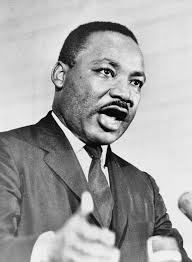
Martin Luther King, Jr. speaking out for freedom.“Is this not the fast I choose: to loose the bonds of injustice, to undo the thongs of the yoke, to let the oppressed go free, and to break every yoke?”

I’m studying Isaiah 58 right now. These are the words of the Lord spoken through his prophet. (That’s what prophets do, you know.)

This week is the 50th anniversary of the March on Washington where Martin Luther King, Jr., caught up in the Spirit, deviated somewhat from his prepared text and spoke about his dream. A dream where people were judged on character, not on skin color.

I was only a kid, living in a small village where everyone was either of German or Irish descent (read “white”)–well, except for one “hillbilly” family that moved in, and they were white. I never knew a black person until I was in college.

But for some reason, I was haunted by images of Ku Klux Klan cross burnings and murders. I can still remember nightmares that there was a local branch (don’t think there ever was–we didn’t have black people, but we did have a secret society of which my dad was a member called the Masons). I feared that they found out that I was pro civil rights and surrounded our house.

Later while I was in college, I endured much teasing about my civil rights stance (I still lived in town and drove 40 miles each way to college to save money since I was now mostly paying my own way). I remember driving through Mississippi to Louisiana in 1970 when I entered graduate school at LSU. Had an equal rights decal on my car. Arrived and then had the thought, what if my car had stopped in the piney woods? Still, I’m white. Not as bad as if I were not.

Progress toward freedom

There has been a lot of progress over the last 50 years. Like all human social change, there were cycles of success and cycles of regress. Many things are better for people of different colors, ethnicities, even gender. Many people have been set free. The leadership of Christians was an example to me that maybe the Christian church wasn’t all bad.

But we still have far to go.

Jesus understood. As have many spiritual people throughout human history. That passage from Isaiah is probably 2,800 years old. Yet, until we all change our hearts and begin to truly worship the one God, then we will not have the justice God demanded so long ago.

Both-And Limitless Spirituality

February 13, 2011

Julian of Norwich had a vision on her deathbed. During the succeeding 20 years, she wrote the experience along with interpretation in her Reflections. Among her thoughts were the three I just discussed–seeking, waiting and trusting.

Psychologist (scientists of a sort), including Christian psychologists, tend to categorize dreams and visions as random firing of neurons in the brain–meaningless, just reflecting random past events in your life. Indeed, most of your dreams are probably just that.

On the other hand, a tremendous number of examples exist documenting a seemingly breakthrough of the spiritual world (a world rejected by materialists of all types) into a person’s life. The Bible documents many. Perhaps I’ve even experienced such an event.

So, is the spirit world just something that is made up in your head? Is the only reality the material world that we can describe?

I just finished reading a book on business strategy called “Both And.” Its premise asks why just limit yourself to one thing or the other, why not do both? As I’m reading Julian and thinking about modern psychologists, I find myself thinking that same thing.

I’m a trained scientist, love the scientific method, and recognize that the tools derived from scientific research have greatly improved the quality of our lives (there are side effects, but that’s for a later essay). But science works in a closed universe. There are too many variables to consider if there are multiple universes. I read once where Dallas Willard had developed a line of thought similar to what I’ve been thinking for years, so I don’t feel like I’m straying from logic.

If God created the universe, then He must be outside our universe. Given both of those propositions, then it stands to reason that God can intervene at times (note: I’m obviously not an 18th Century Deist, sorry if you are). Therefore the numinous dreams and visions that have occurred throughout the history of humans. It’s God reaching out to people–usually to people who were seeking, waiting and trusting. They are open to God and let Him in.

I don’t think that having a God vision is necessarily delusional, but I acknowledge that some people suffer from delusions. You can test a vision by comparing with the long history of God visions.

So, I think we can trust Julian (and others in the tradition) with their experiences and reflections on their experiences. Scientists are great within their closed systems, but typically their expertise does not include experience outside their systems.

Don’t get caught up in false either/or–either science or faith–discussions. Don’t let science shake your faith, but don’t disparage science when it sticks to what it knows.

Both-And–Seek God, Wait on His presence, Trust His coming.

Don’t Cheapen Your Faith in God

January 24, 2011

The bottle looks almost like that of the more popular dishwashing detergent. The price was great–much less than the competition. Must be a good buy, right? But then you notice that the dishes come out of the dishwasher with a grungy film.

Cheap doesn’t always win. Value is the ratio of the price to the quality.

I thought about this in relation to the faith that many people seem to exhibit. So, I was wondering–is your faith cheap? Or a value?

Sometimes I wonder if people get their faith from a cereal box. Or a bumper sticker slogan. Donald Miller in his book “Searching for God Knows What” talks about “propositional” Christianity. That is where someone’s faith consists of repeating short propositions that may or may not be actually based on the Bible.

Then again, sometimes I think that people think way too much about their faith. I was checking out a church’s Website to learn something about them. There was a very long page of “what we believe.” It’s well thought out, I guess, and quite comprehensive.

On the other hand, I’d be warmer toward that church if they had just said, “We’re a community of followers of Jesus trying to help each other live a life with-God.”

It’s easy, but cheap, to just memorize propositions. Not to mention that knowing more propositions than others can be a source of pride. It’s much harder and requires extra expenditure of effort and focus with a dash of humbleness to strive to live each moment with God. Man, sometimes I wish it were easy.

Earn your way to heaven or have relationship

January 13, 2011

I listened to a speaker talking on the rich young man yesterday. He opened my eyes a little. That’s why I read and listen to as many people as possible. By the way, downloading “podcasts” (talks and shows that you put on your iPod for listening later) is a great use of time–better than TV. When I make the 4.5-hour drive to my office in Chicago, I can listen to many podcasts and learn a lot. It’s better than mind-numbing other stuff on the radio.

Anyway, he was pondering the question, was Jesus too harsh with the young man? You remember the story. Rich young man (or rich young ruler depending on which Gospel you read) comes to Jesus and asks what he must do to be saved. (Note the verb “do”) Jesus says follow the commandments (my guess is that Jesus either knew him or knew of him since he was obviously of the aristocratic class). He says he has from his youth.

Let’s pause a second there. He has followed all the commandments? That’s an audacious statement. In fact, isn’t it really impossible?

Regardless, Jesus tells him to sell everything he has and give to the poor. And the man went away unhappy.
So, was Jesus harsh? He didn’t go after him and say, “Hey, wait a minute. I’m still here. Let’s work something out.” Jesus let him go.

In one recording of the story, it begins with “Jesus looked at him and loved him.” Jesus wasn’t hateful to him. I don’t think he was even trying to pile more burdens on him. I don’t think the possession thing is even the point.

The man was trying to earn his way to heaven by being good. Jesus said that we can’t earn our way to heaven. We must turn our lives around (repent) and turn our focus and belief toward God. And Jesus says that if we have a relationship with him (like being his friend) then he will help us find that focus on God and enjoy God the Father’s grace.

The man evidently was still trying to earn his way into grace. Maybe his whole life had centered on the ability to buy his way out of anything. I bet you know people like that today. Therefore, the wealth gets in the way of relationship. I bet you know people like that with their personal relationships–let alone relationship with God.