Becoming a Good Person

March 7, 2013

“She’s a good person.”

Have you ever said that about someone? What did you mean? What caused you to think of that person as good?

Someone recently mentioned the Pharisees in a conversation. That brought up a meditation on the group and Jesus. John, especially, draws very sharp lines between Jesus and the Pharisees. When I start to meditate, I usually wind up bringing several streams of thought into a river.

Dallas Willard said recently that the Pharisees tried to be good people by acting good. They had a list of rules and believed that if they followed the list completely, they would be good. Jesus said that you should become the kind of person who naturally does good.

Bill Hybels was talking about the power of a schedule (I wrote about that this week) and taught that you should look at your schedule as you make it out each week not as a list of things to do, but as a reflection of the type of person you wish to become.

I think I’m finally beginning to take a hint. OK, I’m a slow learner.

What do I want to be when I grow up?

I think someone whose heart is in the right place and that I naturally do good (not perfect, but good).

To answer my question posed at the beginning–I started thinking of a list of qualities (not a Pharisee list) of people we think of as being good:

  • Pleasant, always with a smile
  • Greets people when they see them
  • Helps out in constant, small ways
  • A comfort when you’re down
  • Rejoice when you rejoice
  • A guide when required, support when required
  • Never gossip or speak ill of others
  • Deflects praise to others

Can you think of others? God said that the Law would be written on our hearts. I think these actions reflect that sentiment. We’re living with-God when we naturally reflect God to others.

A Root-Cause Analysys of Your Spiritual Life

March 6, 2013
Forming Your Spiritual Life.

Forming Your Spiritual Life.

“Spiritual Formation is not about changing behavior but changing the causes of behavior.” Dallas Willard recently made this statement in an interview.

We are in the first week of March. I know because there’s a foot of snow on the ground waiting for me to fire up the snow blower one last time (maybe). It’s also the time when New Year’s Resolutions are history.

Ah, January First. So much hope. We’re going to begin eating right. Working out. Reading the Bible.

We are going to change our behavior.

Didn’t work, did it. The extra 20 people who signed up for my Yoga class showed up once–or not at all.

Why are we overweight? Spiritually lax? Relationship challenged?

Andy Stanley, teaching on another topic, talked though about getting to what we call in manufacturing the “root cause.” In Lean Manufacturing, there is a technique called “Five Whys.” Confronted with a problem, you ask, “Why is that?” Then again, you ask, “Why is that?” Soon you will get to the real cause.

Back to Stanley. He was talking about emotions in a relationship. You might say, “I’m angry at you.” But if you went to the root cause (my words, not his), you might define the real emotion causing anger as insecurity, jealousy, fear.

What are the root causes in our lives that block us from living a life in the Spirit? Laziness, insecurity, feelings of inadequacy, pride?

Those are the things we need to work on. What kind of person do you wish to become? Focus on that, work on it, and the rest will follow.

Make Using Your Time A Spiritual Discipline

March 5, 2013
Schedule your time as a Spiritual Discipline.

What does your calendar say about you?

What does your calendar say about you? Is it filled with appointments for work or church? Who are you seeing? If I looked at it, would one or both of us be embarrassed?

How are you feeling about your time right now? Stressed? Not enough time for things you would like to do? People you would like to see? Books to read — or write? Kids to play with?

Time is a Spiritual discipline.

The Bible does not spell it out. But Daniel took time out of his busy days to pray three times daily. Jesus went off alone often to play and meditate. It must have been on their schedule.

Did you know that you could put time on your schedule just for you? There. You have my permission. Right on your calendar you can block out 15 minutes for prayer or meditation. 30 minutes for Spiritual reading. An hour with your spouse or kids. Date night. Block out time for growth and reflection. Another meeting? Sorry, I’m busy at that time.

Bill Hybels talks about the power of the schedule. When you set out to enter things, he advises, don’t ask what you want to get done. Ask who you want to become.

View your use of time as a Spiritual Discipline. Use it to become the person God wants you to be.

Confession: An Ignored or Forgotten Spiritual Practice

March 4, 2013

“Religion tends to make you closed and dishonest. Alcoholics Anonymous works, but in church we just don’t trust enough to confess to each other.” Dallas Willard, a brilliant philosopher and theologian, made this comment recently.

James advises us, “Therefore confess your sins to one another, and pray for one another, so that you may be healed.”

Confession may be one of the Spiritual Practices (or Disciplines) that is least done–ranking up there with fasting.

I have not heard my American Catholic friends talk about the formal “going to Confession” (is it a Rite or a Sacrament?) for many years. Is this something slipping away even there? In the Catholic tradition, you would confess your sins to a priest in complete privacy who would offer forgiveness in the name of Jesus and the community. In the Protestant tradition, we remove that intermediary.

But all the same, when was the last time you confessed any sin to another Christian? In my case, most likely never aside from the times as part of a worship service when the leader makes us repeat something printed in the bulletin or liturgy.

Willard suggests a problem. Do we trust those around us in church enough to stand and confess before the gathered community? Probably not. We know too many gossips in the group. Or, we’re afraid of the gossips–or those who would use the information against us.

And that’s a tragedy.

What a lost opportunity to help others heal! What a lost opportunity for us to heal.

My last post talked about opening our eyes to see our failings. The next step is to confess to someone. Confessing to God in private most assuredly helps. But having someone around us offer assurance is necessary for healing.

The small group movement–which I’ve been involved with for 40 years probably–always begins with a covenant that “what is told in the group, stays in the group.” (And you thought Las Vegas invented that line!)

We need that covenant in church. We confess, receive assurance and it stays there.

Repentance Means Seeing

March 1, 2013
Wile E. Coyote about to fall.

Wile E. Coyote never falls until he realizes that he’s not on solid ground.


Wile E. Coyote chases the Road Runner. He dodges and the Coyote runs off the cliff. He keeps running until.. He notices. Nothing below him for 500 feet but air. Then, he falls.

Adam and Eve walked with God every evening naked. Then one day the evil one came between them and God. They now had knowledge of their sin. Where once they were clothed with God’s righteousness now they were transparent. Naked before God. They knew it and they hid.

Do we think we can hide our sins from God?

I was listening to Dallas Willard yesterday. If you don’t know him, go to Amazon and search. Buy a couple of his books. One of his comments yesterday was that repentance is about seeing. We must see ourselves before we realize that we are not running on solid ground.

Do you ever feel like you are running through life and stiff is happening, but it’s all just a blur?

That’s when you need to:

  • slow down
  • take a few deep breaths
  • let your mind scan your body and your activities
  • reflect, that is, think for a while on your situation
  • bring God into your awareness
  • let God’s grace envelop you
  • just accept the grace
  • return to your life refreshed

Show Your Works Are Done With Wisdom

February 28, 2013
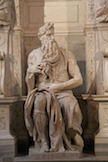
Moses representing Wisdom.

Rays of light, symbolically represented as horns on the head of Moses (Michelangelo), can be a graphic symbol of Wisdom.

“Who is wise and understanding among you? Show by your good life that your works are done with gentleness born of wisdom.”

James is known as a writer in the “Wisdom Tradition,” much like Solomon to whom is attributed much of the book of Proverbs. When I read this verse (chapter 3, verse 13), I thought, so what is wisdom?

Did you ever read a word 1,000 times and then stop and ask, “Just what do they mean by that?”

So, I looked it up in Wikipedia. Here are some things I learned. “Wisdom is the judicious application of knowledge.” I first have to know something. But knowing isn’t enough. I have to apply that knowledge somewhere in my life. Shoot, here we go with the parts of speech again. We start out with a noun (a thing) and then move to a verb (something we do). Kind of like when I just wrote about love as an action verb, wisdom also leads to action.

What!? We can’t just sit around being wise?

Wikipedia continues, “It is a deep understanding and realization of people, things, events or situations, resulting in the ability to apply perceptions, judgments and actions in keeping with this understanding. It often requires control of one’s emotional reactions (the “passions”) so that universal principles, reason and knowledge prevail to determine one’s actions. Wisdom is also the comprehension of what is true coupled with optimum judgment as to action.”

Sounds a lot like James. He asks, “Are you wise?” I bet that could be a trick question. I can imagine him in a gathering of Christians asking that question. And someone raises their hand and says, “Oooh, Oooh, I am.” You know that kid from school.

Then James says, “Good. But don’t tell me. Show me.” It’s not enough to be wise, you must show it. Doesn’t that sound like the entire Gospel? It’s not enough to know, you have to do.

Do We Stay True To Our Master

February 27, 2013

In American business conversation, we usually use phrases derived from sports. So we use a phrase from American football (which, of course is played very little with the foot) for at least the last 30 years, “Take the ball and run with it.”

Sometimes, I have seen people take the ball and run with it, but they don’t know when to stop. They go past the end zone, through the tunnel and “spike” the ball in the parking lot.

OK, it’s a tortured metaphor. I was thinking last night of the problem of disciples taking one phrase or attitude from their master, or teacher, and going too far.

A woman in our Yoga class last night said something that reminded me of a story about the great Russian writer, Leo Tolstoy. He was a well-known pacifist in almost all things. He attracted a flock of disciples who gathered at his estate, I suppose to live off the rich, old guy, or to learn from him.

It seems that one afternoon during a discussion, a mosquito landed on Tolstoy’s arm. He rather absent mindedly swatted it. His disciples were aghast! How could the great Tolstoy kill a living being!?

That’s going too far.

I’ve read many, if not most, of the world’s greatest spiritual seekers. Then I’ve read about what some of their followers have done with the teachings. Mostly the seekers wanted to breed other seekers. They wanted to point them in the right directions. Help them out.

But some of the followers just wanted a list of rules. Then they would take one of two of his teachings and emphasize them beyond the entire body of teaching–and against the attitude of spiritual seeking of the master. It’s more like, we don’t need to seek anymore. The master was the explorer. He found the gold mine. All we have to do is carry out the gold.

A friend of mine just discovered that in the history of Christianity, not all who professed to be Christian actually behaved in a Christ-like manner. In fact, the history of the Christian church is filled with violence, depravity, hate. That’s what happens when we cease being seekers and think we have found the gold.

Each person born into the world must seek for God himself. We cannot incorporate others’ learning by osmosis. We must learn for ourselves. There are no shortcuts in life.

Overcoming Those Quite Habits

February 25, 2013
St. Jerome Studying and Commenting on the Word

St. Jerome Studying

Sometimes you just sort of start doing something without realizing it is becoming a new habit. I rise early so that I can read either from the Word or from writers who can teach me about the Word. Have my coffee. Meditate. Write. And then I’m ready for the day.

But…the first thing I do when coming downstairs is head for the front door and pick up the morning paper. Then I scan the first couple of sections while my coffee is brewing. Then I sit down and finish the paper. Then there went 15-20 minutes. Gone. Most of the “news” is “olds” by the time I read it in the paper. Except maybe for some sports scores. And I read some of the comics. Sometimes I find I’ve read a column or article or two that were just mindless entertainment.

I’ve become distracted. Lost some of my precious time. It’s not that I’m so Puritan that I don’t believe in entertainment. I watch the TV series “Elementary” most every week. Sometimes I watch European soccer–but that’s partly also learning more about the game and how referees manage the game. Partly entertainment and partly learning.

Pope Benedict XVI (What do we call him Friday? Back to Joseph Ratzinger? When you’re not Catholic, it makes for a quandary.) gave a series of talks on the early Church Fathers. Looking at St. Jerome, he quotes:

“It will be difficult for you to correct those things to which you are quietly habituating yourself.”

Those are the most insidious of the habits. You didn’t consciously choose to start that habit. You didn’t consciously choose to keep it up. You just sort of fell into it and then just sort of do it.

But the genius of being human is the power to reflect. If you stop occasionally and look back at your life and habits, you can actually realize what you’re doing and then make that conscious choice to change. To develop a new habit to replace that unconscious one.

What new habit do you need to develop today?

Love Is Something You Do

February 21, 2013

I have growing appreciation for John’s (the apostle) Greek usage. I don’t speak or read Greek, so I rely on experts. A few months ago I learned where John made up a Greek word to describe faith (as “leaning toward”).

This week I was listening to a speaker (now this may have been Jesus’ use of Aramaic, which also I don’t speak) who talked about a command Jesus left us recorded in John where he changed a noun into a verb. “Love one another,” he said.

You are not in love; you do love.

There is an old Christian folk song, “Love is something you do; love is something you do. Not always something that you feel, but it’s real.”

Modern psychological researchers have discovered something that Jesus already knew. In fact, it’s also ancient wisdom. Actions come first, feelings follow. Even if you don’t feel loving, your actions will lead you to be loving.

What cost is a smile? No matter how you feel. When your smile is reflected back to you, your spirits are lifted.

When you serve others–maybe just opening a door for a harried mother, or buying a meal for someone, or giving your coat to a homeless person–that loving feeling follows.

Now let’s go out and live into Jesus’ command. Love others.

Relax Into Focus and Awareness

February 20, 2013
Balance requires focus and relaxation.

Balance, focus, awareness, relaxation

“Try easy.” Have you ever attended a seminar led by one of those self-help, motivation, time management speakers? The first one I ever heard was in the late 70s. This was his mantra.

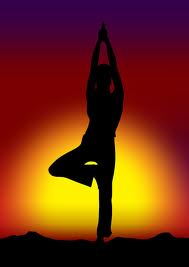
Yesterday I wrote about focus. Last night as I was teaching Tree Pose (see picture, it’s not me) to some new people at Yoga class, I thought about the paradoxes. New people will be trying so hard to balance. They think it’s very hard to do. They try hard. Where is the foot? Where are the hands? Stare at my spot.

And I was reminded. You have to relax.

Still the mind as you focus on your spot. Use your mind to scan your body (awareness) looking for places where you are holding tension. Release the tension. Make sure your breathing is easy and normal. Count breaths (that’s how you know how long to hold the pose). The key to balance is focus with awareness of your body and relax into the pose.

Sometimes we try so hard that we just cannot succeed. We actually lose focus by trying so hard to focus.

By the way, you don’t have to have the shape of the model in that picture to successfully hold Tree Pose. We have shall we say “larger” men and women who can hold Tree for 10-15 breaths in my class. I have actually learned to hold the pose focusing on my stable spot all the while using peripheral vision to watch all the people in class so that I can go to someone and help if necessary. But I have to achieve the relaxed awareness state of mind.

Try relaxing your mind and body and discover that your focus and attention on the task at hand improves.