Making Things Better

June 9, 2020

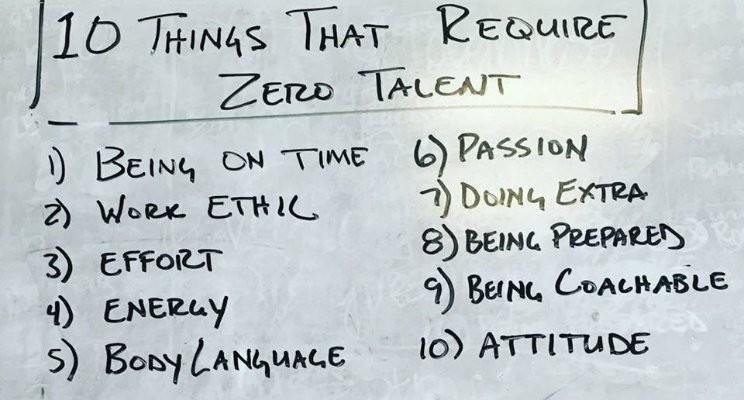
Energy and attitude comprise the basic foundation of our personality. Energy is the basic life force that we can either give or take (from others). Attitude implies orientation. A direction we are about to take.

We can have energy to give, but if we don’t know where to take it then it dissipates into nothing. Our attitude can be that of making things better, or we can hoard energy and do nothing with an attitude pointed inward.

Reading Seth Godin recently, he noted, “Making things better isn’t about what you look like or where you work. Making things better is an attitude. The attitude of possibility and the posture of generosity. And then making the decision to own your learning.”

It’s also not about where you are. Wherever you find yourself, you can be the person who makes things better.

Things may not always look good. But take Seth’s advice, “Don’t ever stop speaking up, don’t stop leading, don’t stop learning. Don’t stop seeking justice. We can’t give up.”

Hearts Must Change

June 8, 2020

The marches and folk singers and stories of confrontations with white police affected me deeply when I was young. The civil rights movement.

Which was more than a little strange given that I had never even met a black person. My first black friend (and also first Jewish friend and first Jewish person I ever met) came into my life as a university freshman.

But I was optimistic back in those days. Laws were changed. By the way, a conservative Republican Congressman was key to passing civil rights legislation. People remember Lyndon Johnson, but Bill McCulloch (my Congressman at the time, dad was on his campaign committee) was key to getting enough votes to pass. Would that happen today?

Note to the Christians who today think that changing laws brings forth a Christian society—-it doesn’t work. Laws only did so much in Jesus’s day. They only changed so much in the 60s. They only do so much now.

We changed laws 55 years ago. But we changed only a few hearts. Obviously. Just look at the news at all the angry and hate-filled hearts.

On the other hand, it is heartening that hundreds of thousands came out to show support peacefully all over the world.

We start by acknowledging the other person. Person to person. Listening—something that is an exchange of energy.

And teaching—showing that people who are different are not necessarily threatening. They can be your friend, too. When we are not threatened, then we are not full of fear. We accept a diversity of people, cultures, opinions. Indeed, we rejoice in it.

Changed hearts can change systems. And then we’re on our way to a healthier, mature culture.

Yearning For Freedom

June 5, 2020

Freedom is an emotion-laden word. And concept.

Americans today with little sense of history think the concept originated here. That is not true.

As empires formed and swept through the ancient Middle East and Mediterranean world, conquered tribes yearned for freedom from being servants of the new rulers.

After Jesus’ resurrection and the formation of the church, new followers felt that freedom—still under Roman rule, but also now a citizen of God’s kingdom.

But what did freedom mean? Did it mean that the people could do as they pleased? Follow every desire and whim? Living without caring about others but only to satisfy the temporary pleasures of the flesh? Ability to rip off the face masks of oppression and infect others with a potentially deadly virus? Free to riot in a time of unrest so that blame could be placed on other, peaceful protesters? Oops, those last two aren’t from ancient times. But they fit.

The apostle Paul wrote a letter to one of his little groups of Jesus-followers trying to explain what is hard to explain. What is freedom.

Freedom is not a list. It is not “Do this, don’t do that, can’t you read the sign”.

When you live in the spirit, you are free. Yet, you will also find yourself following the laws of moral living—loving God with all your heart, mind, soul, and strength; and loving your neighbor as yourself.

Sometimes I pause and contemplate the yearning for freedom of peoples throughout the world and think how petty some of the things are that we call freedom.

The founders of the American government knew that with freedom comes responsibility. If the two do not walk hand in hand, then true freedom is lost.

A Complete Lack of Morals

June 4, 2020

If you had told my 20-year-old self that I would write this, he would have denied its possibility. Being typically adolescent male in college in the late 60s, I saw the topic of morals from a certain point of view.

That is: “Morals” were preached at others by stiff, uptight, self-righteous, judgmental (and often hypocritical) old people.

Somewhere along the way I learned that morals were at their foundation a reflection of the Golden Rule. Every major religion has a version of the same “rule” of life. If you incorporate this into the fabric of your life, you have moved a long way toward a moral life.

Do unto others as you would have them do unto you.

Jesus left very few commandments for his followers, although they encompass everything about how to live your life:

Love the Lord your God with all your heart and with all your soul and with all your mind and with all your strength.’ The second is this: ‘Love your neighbor as yourself.’

During my 20-30 minutes daily with news and 10-20 minutes with Facebook (Twitter for me is mostly business and I don’t do the others), I am overwhelmed by the sense of a total lack of morals on the part of so many. Even those who might call themselves moral—wake up, you are not practicing the foundation of all morals.

Many have re-written the Golden Rule on their hearts as “Do unto others before they do unto you.” That reflects an entirely different gospel.

God bless all those out there trying to show the love to others. Be safe.

Not Everyone Who Calls Me Lord

June 3, 2020

Jesus knew that when you become a popular leader some will try to latch on to your name and cause for their own purposes. “Not everyone who calls me Lord,” he said, “will enter the kingdom of heaven. Only those who obey.”

Being a Jesus-follower is a discipline, a practice. It is something you do every day.

Do you follow someone by what they say. Do you watch and see if their actions match their words? Perhaps you follow a professional sports team. The owners talk constantly about building a winning team, yet once again the team is hopelessly mired in the second division.

How gullible are you?

True Believers are often the most gullible people on the planet.

Today’s culture spreading from 1920s Hollywood to the country and then to the world worships media stars. Often those who grab the headlines are not the best role models.

Those who do the hard work of being a disciple of Jesus seldom are recognized publicly. Maybe later, people will say, “There was a true follower.”

Don’t be gullible. Don’t be shallow. Do the work of peace, justice, service, reconciliation. Don’t just call out the name of the Lord, but do his will.

Stand In The Other’s Shoes

June 2, 2020

“You must absolutely stand in the other person’s shoes.” Former (and first woman) US Secretary of State Madeleine Albright speaking on Tim Ferriss’s podcast responded thus to a question about being a woman diplomat in those days (1990s) and conducting high-level diplomacy.

There are many failures of political, religious, and moral leadership behind both this outbreak of the release of pent-up anger sweeping the country. This could also go to the heart of the poor (in some areas) response to the health crisis affecting the entire globe also today.

This reminds me of Jon Swanson’s current theme at 300 Words a Day—So I think that for me, the prayer of confession becomes this: “We your people have sinned, and my particular family / denomination / thread of theology has sinned and I have sinned.”

That is a little of what I tried to express yesterday. Yes, I understand that white policemen fear black men. I’ve never been in their shoes, but I can feel how threatened they must feel every time they put on the uniform. They have become targets. It doesn’t happen often, but way too much, that people pull out weapons and fire at them.

However, the US has had state-sanctioned violence against black men ever since the end of Reconstruction. It’s less overt today, but still raises its ugly head. A black man can’t even go jogging through the neighborhood without fear of confrontation and death—just for being black.

When you have two groups with a line drawn in the middle and no effort to reach out, there will be problems.

I admire the white people who try to become a human barrier between the sides at protests. And the police (see they are not all bad) who were marching with the protesters. And the police chief who told the president to shut up if he couldn’t be a solution instead of a problem.

I live far away from any of the demonstrations. But like Jon, I can pray for forgiveness and work where I am for peace and justice. For without justice, there will never be peace.

Justice will begin when we can stand in each other’s shoes and see the world from a new perspective.

Repressed Anger Hurts Yourself and Others

June 1, 2020

Ancient wisdom teaches us to recognize our hurtful emotions—those that keep us from God—and then to overcome them.

Repressing emotions lead them to manifest in many ways not healthful to the body, the soul, the community.

Anger has many fathers. Often it is born of fear.

When there are two groups of people and each fear the other. And when each repress the fear and anger, the body and soul are injured.

And when something happens to unleash the anger, no one can predict the course of the river of violence. And the hurt and pain and suffering.

The time to deal with the problem is before the eruption. Before the spouse erupts and causes harm to the other; the parent to the child; the mobs to the community.

There has been no effective political leadership for 50 years. The Christian church has had zero effect.

Somewhere there must be an “intervention” to help people deal with and overcome fear leading to anger leading to violence only to settle back into uneasy repressed emotions waiting for yet another spark to set off another explosion.

I guess that means starting with me…and each of you individually.

“Inch by inch, row by row, gonna make this garden grow,” sang Pete Seeger.

Be a Contribution

May 29, 2020

Who am I? What am I?

<pause/>

I introduced The Art of Possibility by Roz and Ben Zander. It’s a set of 12 practices brought to life with wonderful stories. One is the practice of being a contribution

Instead, life is revealed as a place to contribute and we as contributors. Not because we have done a measurable amount of good, but because that is the story we tell.

When I began playing the game of contribution, on the other hand, I found there was no better orchestra than the one I was conducting, no better person to be with than the one I was with; in fact, there was no “better.” In the game of contribution you wake up each day and bask in the notion that you are a gift to others.

The practice of this chapter is inventing oneself as a contribution, and others as well. The steps to the practice are these: 1. Declare yourself to be a contribution. 2. Throw yourself into life as someone who makes a difference, accepting that you may not understand how or why. The contribution game appears to have remarkable powers for transforming conflicts into rewarding experiences.

Are we a contributor to the good of society, of those around us? Or are we following our selfish passions unaware and uncaring about our impact upon those around us? Am I spreading a virus because I want to have some beers with friends? Or to gather in my house of worship?

Or—maybe I am finding ways to contribute to health and justice and peace?

As always, first comes awareness and then comes decision.

Are People Out To Get You, Or Are They Kind?

May 28, 2020

Yes.

Many people exhibit the point of view that everyone is out to get them. It’s a “dog-eat-dog” world. “Do unto others before they do unto you.”

Check social media out. Step back so as not to get caught up into the maelstrom and just observe. Begin to sort out whose posts are almost always reflecting this worldview.

While greed and pride are sometimes drivers of this, you will find the base emotion almost always is fear. Some people are afraid. They wake up in the morning fearful of what might happen. During the day, they are afraid someone (usually of a different religion, race, ethnicity) is going to take what is theirs.

Some of these people consider themselves to be Christian. But you’ll find no ethic of Jesus there. More likely a misinterpretation of the Hebrew Scriptures seeing a vengeful and harshly judgemental God.

A short interlude. Yes, there are times to be afraid. That is often a survival emotion. I’m talking about something quite different—an orientation toward life and everyone in it based on fear.

Thankfully not everyone is like that. They have a possibility mindset. They jump in and help where needed. They reach out to the poor, the stranger, the oppressed, someone in need (no matter how small).

The fundamental emotion is love—an overused word in English. While realizing evil exists and that people have many sometimes conflicting emotions, they also see the possibility that God loves them and therefore they also need to practice an act of love, acceptance, service.

You can find examples of this attitude on social media, as well. But it’s more of a whisper compared to the shouting (many times literally using all capitals) of others.

Should you begin to reflect on yourself and begin to realize the fear inside, you can begin to change. This post is too short to delve into an area that large books cover. The first step is realization. The next is to seek out those with a possibility mindset and orient yourself with them.

It’s a practice. It takes time. It is possible.

Criticism Comes So Naturally

May 27, 2020

“You criticize people while they are alive, and pray for them when they’re dead.” Line from a TV show, Midsomer Murders, during a conversation between two elderly sisters. One has a bit more experience with the world; the other completely old-school religious.

It is so easy to criticize. For some it’s an integral part of their personality type. For the rest it’s a way to make ourselves feel more superior, more correct.

School starts us off ranking us into the good and the bad (students, but also behavior). Many religions sort us between the sheep and the goats. And we are to be the superior sheep rather than the goats consigned to hell.

There are people who, without thinking, react to almost everything said to them critically.

This is learned behavior that can be changed. It’s probably a coping mechanism learned in childhood to survive whatever dysfunction affected them in the family. It can be unlearned with new habits.

Awareness helps. When we are aware of how we react to others, we can set ourselves a cue when we feel the urge toward criticism.

Somehow this reminded me of something Linus (a character in the comic strip Peanuts) said. “I love humanity. It’s people I can’t stand.”

No matter what lofty ideals we may have, it is in the world of individual people that our true selves manifest.

Maybe we pause before hitting send on the next social media post. Consider if it is merely a critical reaction we’re sending into the wild, or if it is an uplifting thought or story helpful in its intent. Maybe we just delete.