Archive for the ‘Christianity’ Category

In Old Age They Still Produce Fruit

October 9, 2013

“If you keep on living, you’re gonna get old.” from a blues song.

Someone asked me once where I get ideas for posts. Well, from what I read, listen to, and observe. Recently I have been listening to “Bluesville” on Sirius XM when I’m driving and not otherwise listening to podcasts. This line from a song caught my attention.

There was a restaurant our staff frequented in the early 80s in a north suburb of Dayton, Ohio, where the slogan was, “If I’d have known I was going to live this long, I’d have taken better care of myself.” I think that’s the implied message of the song.

From the time I was quite young, I pictured myself as one of those old guru type of guys, wise and calm and focused on God. It’s weird for an adolescent to think that, I guess, but it must have come from all the philosophy and theology I was reading even back then.

Where do you see yourself as you grow old?

Psalm 92 has an interesting picture:

The righteous flourish like the palm tree,

and grow like a cedar in Lebanon.

They are planted in the house of the Lord;

they flourish in the courts of our God.

In old age they still produce fruit;

they are always green and full of sap,

showing that the Lord is upright;

Those who are rooted in God will flourish in old age (if we keep on living, as the song says). Always green, bearing fruit.

I know people who retire in order to essentially do nothing–or to just wallow in self-absorption. I do not see that in my future. I am always looking for new ideas, new ministries, new things to learn, new ways to serve.

“They are planted in the house of the Lord” means that we are rooted in the Word and the Spirit of God. And along with James we live out our faith refusing to become lazy in self-indulgence.

Make Rules or Make Disciples

September 23, 2013
Division like fractals

Mandelbrot fractal image. From Wikipedia.org

We took a vacation last week. My wife’s family gathering. We worshiped in a church of a different denomination than the one we attend. It’s a southern-based, conservative off-shoot of another denomination.

Reminded me of the years I taught a course on American Baptist history. How there was Roger Williams, then Northern Baptists (now American Baptists) and Southern Baptists. And then they split like fractals.

Sometimes these divisions are based on worship style. Some like the solemnity and mystery of high Mass. Others prefer jeans and T-shirts, guitars and drums, hands waving in the air celebration. As for me, I like almost any of the styles.

Most of the divisions are created by rules. We created organizations called churches or denominations. They had to have rules. Then someone said, “I don’t like your rules. I want to make up my own rules.” And off they went. We still do that today.

It is as if Jesus said, “All power in heaven and earth has been granted to me. Go, therefore, and make organizations with individual rule sets around the world so that you can worship God with those with whom you agree.”

But, wait, Jesus didn’t say that. He never spoke about organizations other than to point out the problems with the one religious organization he knew–the Temple worship cult. And he didn’t like it.

What he said was, “Go…and make disciples. Teaching them what I have taught you.” Making disciples–that’s a one-to-one thing. Not a political thing. You model Jesus so that others can model Jesus by modeling you. It’ not rocket science. But, it requires intentional living.

And the organization thing–that’s a human condition. How many divisions of Judaism are there? Islam? Buddhism? Hinduism?

It’s time to focus on the Lord who showed the way. Not on divisions. Divisions detract us from placing our entire attention on God.

Being Rewarded Without Showing Loyalty

September 9, 2013

“The loyalty program that doesn’t require loyalty.”

I don’t watch much TV. Sunday Masterpiece Mystery. Occasional Diners, Drive Ins and Dives. Maybe Sunday afternoon soccer. But I entered Saturday TV wasteland last weekend watching part of a college football game. My attention was jarred by this hotels.com ad. Wow, this fits it all, I think, this Age of Narcissism.

You get all the benefits without the commitment.

Is your church this way? Your business? Your non-profit organization. What’s that old Dire Straits song, “Money for nothin'”? In addition to a great guitar line, the song really rips into people who think it’s all easy.

Luke writes about a time Jesus was walking along a road and meets several people (end of Chapter 9):

As they were going along the road, someone said to him, “I will follow you wherever you go.” And Jesus said to him, “Foxes have holes, and birds of the air have nests, but the Son of Man has nowhere to lay his head.”

To another he said, “Follow me.” But he said, “Lord, first let me go and bury my father.” But Jesus said to him, “Let the dead bury their own dead; but as for you, go and proclaim the kingdom of God.”

Another said, “I will follow you, Lord, but let me first say farewell to those at my home.” Jesus said to him, “No one who puts a hand to the plow and looks back is fit for the kingdom of God.”

Looking at these thoughts from the point of view of a leader, I want only those people who are committed to the cause. Of course, like Jesus we as leaders need to define the cause and make it compelling for our followers. But we need followers who are committed.

Looking at this from the point of view of an individual, I need to make the commitment. It’s not all about me. There’s no loyalty reward in life where I don’t have loyalty. As you sow, so shall you reap. The decisions you make today determine what will happen to you tomorrow.

What is your level of commitment?

Passionate Pursuit

August 20, 2013

A young relative is in love. How do I know? He writes with great passion about his beloved. He thinks about her constantly. Her well-being is on his mind.

Jesus said, “Whoever will come after me, must deny himself…”

The phrase come after in the social context of the time usually refers to a romantic passion. The phrase must have been one of those that Jesus was famous for–using words in new ways to point to a relationship with God and totally confusing his audience to the point of making them think about what he said.

What have been the passions of your life? Remember pursuing a boy/girl or woman/man? Can you recapture that passion in your mind? Better yet, maybe you still have it. I wrote last week about what happens when that feeling dissipates.

Let’s think about this in terms of denying yourself. If you are pursuing someone so passionately, you don’t care so much about yourself (if you are, then you’d better check your emotional maturity index). You deny yourself such that your beloved is honored.

Paul tried valiantly, if confusingly, to describe this in his description of marriage–a picture of mutually denying yourself in order to honor your spouse. It seems confusing to read it. Paul would have been better served in getting his point across by telling a story about a husband and wife and how they act toward each other.

The world would have been spared much grief had translators understood denying oneself and become a servant (some translations slave) of Jesus. Perhaps a story rather than intellectual discourse would have helped. Nineteenth Century philosophers hated that word slave and the picture of Christians as sheep and wrote philosophies that ended up enslaving millions and murdering hundreds of thousands or maybe also millions.

How about a story about loving Jesus so much that your every thought is about him. All you want in life is to serve God passionately. You’re a servant. But an empowered servant, because the more passionately you love God, the more you will deny your own will to serve him and conversely the more God will make you stronger and stronger. They forgot that last part in the Nineteenth Century.

We need to remember it. The more passionately we follow Jesus, the more we try to please, honor and serve Him. But, Jesus then gives us great power.

Lost That Loving Feeling

August 12, 2013
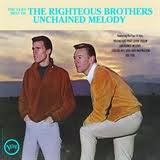
Bill Medley and Bobby Hatfield, The Righteous Brothers

Bill Medley and Bobby Hatfield, The Righteous Brothers

The powerful voices of Bill Medley and Bobby Hatfield, The Righteous Brothers, pound in my brain. “You’ve lost that lovin’ feeling, oh-oh-oh, that lovin’ feeling; Baby, you’ve lost that lovin’ feeling and it’s gone, gone, gone.”

Our small group has been reading Not a Fan: Becoming a Completely Committed Follower of Jesus by Kyle Idleman. In a chapter called Passionate Pursuit, he discusses a concept I haven’t heard for years–acedia. That’s a Latin word usually translated as sloth–one of the “seven deadly sins.”

Like Idleman, I pondered why “sloth” was one of those sins. It just didn’t seem to fit. Then I read the Desert Fathers writings and came across John Climacus (or St. John of the Ladder) who wrote The Ladder of Divine Ascent. This great book from the 7th century describes for the early monastic movement what emotions to overcome on your Divine ascent, and he devotes a lot of space to acedia (uh-see-dee-a).

You have been pursuing something with great passion. Your girl friend / boy friend. Your profession. Your sport. A deeper Spiritual life. You think you cannot live without the object of your pursuit.

Then, something happens. Usually a little at a time other cares start to impinge on your mind, emotions, energy. You don’t seem to care as much. Don’t devote so much time.

Then Bill and Bobby are singing your song–You’ve lost that loving feeling.

Passion is used often these days to describe oneself. Once in an editorial I wrote about being passionate about automation and manufacturing (I still am, by the way). A friend wrote that she is a “passionate communicator.” (and she is). So many people begin something with great passion and then wither–like the seeds scattered on thin soil that Jesus describes that sprout fast and then wither in the sun.

If you’ve lost that lovin’ feeling in your Spiritual quest, there are ways to get it back. You begin by getting back into the Spiritual Disciplines. Read The Bible or a devotional every day. Meditate and Pray every day. Worship and Celebrate with your Jesus-follower friends. Remember why you were first in love. Stir up the embers in the fireplace and add some new kindling. Get the fire roaring again.

Why Do Christians Act More Like Congress Than The Supreme Court

July 24, 2013

I like Don Miller’s writing. It is fresh, honest, transparent–all the attributes lacking in so much that passes for Christian literature. If you have not read him, here are a couple of Amazon links to get you started, Blue Like Jazz and A Million Miles in a Thousand Years.

He wrote on his blog Monday about observing the US Supreme Court. He hits his theme with which I have much sympathy–we must move past these “liberal” v “conservative” opinion shouting matches and focus on Jesus, himself.

“What I love about the court is that, at least in principle, each Justice is more committed to the truth than they are to their opinions. And the checks and balances that keep their personal views in check are immense. Each must defend their decision in precedent and opinion. Activist Judges would be marginalized quickly.”

There have been different streams of thought on the Court ever since it was founded. But that’s OK. They always must write out justifications for their opinions–and always return to the source and try to pick out the traditional interpretations.

“I trust them more than any other body of government. And I’m convinced we, as Christians, have much to learn from how they do business. If we can learn from them, the whole liberal vs. conservative and reformed vs. postmodern nonsense that is absurd (and strategically manipulates ignorant masses to buy books and join the tribes of control-freak leaders) can end.

“The job of the court is not for them to do what’s right or what’s moral. The job of the court is to uphold what they deem as Constitutional, meaning that many times they have to make decisions, not according to their conscious, but according to what they deem as upholding the Constitution.”

Miller then relates it to the relationship we as followers of Jesus should have with the Scriptures:

“This, of course, reminds me of a Christian’s relationship with scripture. Like the court, you’ve got activist preachers who only support some of scripture, say, the more conservative aspects, while only giving lip-service to the stuff about poverty and justice and so forth, and some more liberal preachers who speak out for justice but ignore hardline morality.

“As much as we may love or hate the court, we’ve got a lot to learn from them. And that is this: Honoring truth is not about our opinion. It’s about interpreting the document of Scripture as fairly and honestly as possible, and, to be honest, pissing off some of our own tribe when we believe they are interpreting the document wrongly.”

And then he hits hard:

“If your preacher is towing a hard line and unwilling to admit their “enemies” are sometimes right, find a new church. You’re being lied to by a self-deceived manipulator who is using you to build a tribe.

“In my opinion, the court is doing a much more objective job seeking the “truth” than the church is. We act more like Congress — we take our sides and bend truth to defend our tribe. It’s ridiculous. In today’s culture, a truth-teller won’t have a tribe.”

When I study the Bible I always search the oldest commentators first. Then let other streams of thought inform and expand on the original–but never forgetting the original.

Maybe that’s why I’ve never felt like an official member of a “tribe.” I don’t have patience for arguments over theologies that were only developed over the last 125 years or so. I go back to the source–Jesus–and just try to follow him. That has seemed to work for my life.

My Security Lies in Jesus

July 22, 2013

I’m still thinking about fears, worries. Although I try to capture a personal theme from the mascot of Mad magazine (I have not read it for years, but it was one of my favorites as an adolescent), Alfred E. Neuman, who said, “What!? Me worry?”

As an aside, we think American politics are bad now–good ol’ Alfred garnered several votes for President in 1968.

It is oh, so, predictable that race is part of the discussion of the whole Zimmerman affair. Conservatives seem to try to downplay race. Liberals seem to play it up. I keep returning to the words of Martin Luther King and wish we could move beyond race.

Unfortunately, we cannot. I think that this is not only an American problem.

Race remains an underlying tension. Many black men have told me about hearing car door locks being activated as they cross the street. I recently heard about a conversation at a gathering of “respectable, white, Christian” ladies where they quite frankly ascribed bad qualities to black people as an entity all the while disclaiming “I am not a racist.” Sorry, they are.

For black people, then, the issue becomes personal. Many have experienced the slights and innuendos. For most of us “white” people, the issue is theoretical. I wish it would go away, but it lingers.

Fear for your life had to be prevalent in Jesus’ time. He took as subjects for his stories things that people would readily understand. When he told the story of the Good Samaritan, there did not seem to be a reaction about the violence of the robbers. They all traveled from city to city in groups for protection. At the end of the Gospels, we learn that Peter carried a sword. Nothing is made of that simple fact–only in his use of it. I guess they needed some protection at times.

Jesus taught us that security really comes through Him and life in the Spirit.

For some reason in all our discussions in public life and private devotions, we keep losing our focus on the real source of life and security. Paul writing in Galatians further told us that if we are free in Jesus’ grace, why slip back into the old life of rules and worry.

Indeed.

The Pattern of a Spiritual Life

July 12, 2013

Yesterday I wrote about patterns in your life. You slip into these patterns through many little decisions. Many of those decisions you don’t even think about.

One of the abilities we have that makes us human is the ability to reflect. We can think about what we did yesterday. And why. And what we’ve done over the past year. And ask why not something else.

So, if you decide to be a person who lives in the Spirit, then you need to consciously adopt some of those small and larger decisions that will lead to a new pattern of life that aligns with your desire to be that new person.

The first thing is to adopt a teacher. You become a disciple. I picked Jesus. He is the best I’ve found. That is the “larger” decision.

The rest of the decisions revolve around what have been called Spiritual Disciplines or Spiritual Practices. These terms have been around since the founding of the Christian movement–and probably existed prior to that.

You decide that you’ll get up a few minutes earlier in the morning. Enough time to read a little from a Spiritual book–the Bible, good  writers on the Spiritual life, my blog (well, had to throw in a plug). Mediate quietly for a few minutes. Even 3-5 minutes is an excellent start. And pray for guidance and for God to bring the right people into your life.

If you can develop that pattern of life, you will discover a personality change. You’ll become less bitter, self-centered or whatever negative life pattern you’ve slipped into.

Then, you gather with others to worship and celebrate. (Life in the Spirit doesn’t mean being sour and dry all the time. You have permission to have fun.)

Just by developing these five practices over the course of a few months, you will reflect back and see great changes in your life. I certainly have in mine.

[Update note: So just after I opened yesterday’s post with a note about obesity, I listened to a TED Talk from a medical doctor who was thin, fit, with a healthy lifestyle, who developed insulin resistance, added 40 pounds and was headed toward Type 2 diabetes. He is now researching chemical imbalances that might cause obesity in some people. We are all individuals and our systems are complex. But don’t let that stop you from reducing sugar intake and exercising.]

I’d Give Anything To Be Like You

July 2, 2013

“Gosh, I’d give anything to play like you,” gushed the wealthy middle-aged woman to a famed concert pianist after a private afternoon concert to patrons of the orchestra.

“No, you wouldn’t,” he replied. “Or you already would have. You would be studying under a teacher. You would be practicing scales and chords for hours every day. You would rehearse pieces for hours. No, you wouldn’t give anything to play like me.”

He was a bit harsh. But realistic. Consider another story (paraphrased):

“Gosh, I’d give anything to be like you,” gushed the wealthy young man to Jesus one day. “I’ve followed all the laws since I was a child.” (See, he was already farther along than the woman. But…)

“Then go and sell all you have and give it to the poor. Then come and follow me,” replied Jesus.

He went away just like the woman went away.

It’s hard to be a disciple. It’s hard to be like Jesus. He might have taught about love, but he was also a strict master. He demanded total attention. Not just doing a few things. Total commitment.

That’s why I sit in meditation and ponder what I’m holding back from being a disciple.

I’d Rather be a Disciple

June 12, 2013

(first published 4/11/13)

Scott Scruggs of Menlo Park Presbyterian Church also recently picked up on the line of thinking that Andy Stanley began about the difference between Christian and disciple.

Jesus seems always to have requested people to do something, not just be something. If he healed you, there was almost always some requirement. Maybe present yourself to a priest. Or sacrifice at the Temple. Or “go and sin no more.”

I am writing this in the Zurich airport. Down the terminal a little way from me is a group of Orthodox Jews. Several have narrow-brimmed hats squarely on the top of their head. A few have a wide-brimmed hat set back on the head where the front brim points almost straight up. They were saying their morning prayers. A few had prayer shawls over their heads. There were different styles of coats and suits.

Why the differences? They each follow a rabbi. They are disciples. They want so much to be like their rabbi, that they affect his dress style.

We don’t try to dress like our Rabbi (Teacher). We can’t even be 100% certain how he dressed. We can assume, but we don’t have a picture.

But that provokes the question about how we try to be like our Teacher/Master/Lord/Savior. If we don’t dress like him, I guess we have to act like him?

Perhaps our study and meditation for the next few weeks could be about how Jesus acted, what he did, what he said, how he said it, how he developed relationships, how he dealt with controversy, how he treated his friends.

The current term in vogue is to be a “Christ-follower.” I think that disciple is much stronger. I’m not just one of those who followed along while the going was good. I’m trying to be like the Master. I’m his disciple.