Archive for the ‘Awareness’ Category

A Smile Is All It Takes

February 22, 2017

She is a beautiful young woman. My server for breakfast at the Courtyard in San Diego Gaslamp District.

She may have been tall, maybe as tall as me. I’m not sure.

I think she had dark hair. But maybe medium brown.

Maybe a darker complexion. Or maybe fair?

Ah, the smile. That’s what I remember. What a nice, pleasant person with a great smile.

That sort of thing starts your day off right.

Ending the day in Carlsbad Village. Dinner at a nice small Italian restaurant. Glass of chianti. Probing discussion of deeply spiritual things. Is God unity? How wast the universe made? If it’s a closed system, is God outside the system? And inside at the same time?

Unanswerable questions that lead to deeper spiritual insight.

Quiet, and a smile. 

Joy. What a blessing to be able to experience these incidents in the midst of chaotic politics. President? Who cares? There is the Spirit, and only the Spirit.

Quality Questions Lead To Quality Life

January 31, 2017

Quality questions create a quality life. Tony Robbins

God definitely wants my attention. For what seems to be the millionth time, the teaching about asking questions pops into my awareness. That quote from someone I normally wouldn’t quote comes from a short chapter in my current reading, “Tools of Titans: The Tactics, Routines, and Habits of Billionaires, Icons, and World-Class Performers” by Tim Ferriss. This is a good enough book packed with hundreds of ideas. If you read it, just remember that Ferriss, like Robbins, can be way over the top.

But questions. What a good reminder.

Remember yesterday where I discussed growth? Getting out of our cocoon?

Unlike the butterfly who aches to get out of the cocoon and change from a caterpillar that crawls around nibbling on leaves to a beautiful flying creature that communes among the beautiful flowers, humans seem to crave the cocoon.

The butterfly successfully completes its growth through extreme physical work. Beating its new wings against the shell that enslaves it until it get strong enough to break through into freedom.

Questions are the extreme work that we humans use to grow, get stronger, mature.

I have a personality problem. Well, I have many, just ask those who know me. But this one can prevent my growth, and probably others. I’m generally content in groups of people to be quiet and listen. Well, unless they’re talking about people. I tune that out.

But if someone asks me a question, I’ll answer it. And if it is a topic I’m passionate about, I can dominate conversation. That is, until a little voice inside interrupts the train of thought to remind me to ask others what they think.

Questions are the basic requirement of growth in my profession as observer and analyst of manufacturing technology. And in my study of theology.

Jesus asked once, “Who do you think I am?” That question alone should start our chain of questions. What has he said? What has he done? What have been the effects of his ministry? What does that mean to me?

What questions are you asking today?

Jesus Can See Us As We Really Are

December 12, 2016

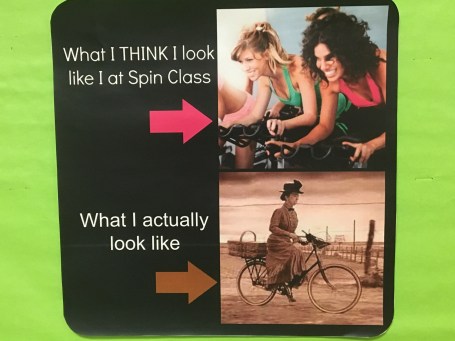
So many people came to Jesus with a picture of themselves in their minds. I’ve been thinking about Jesus’ encounter with the rich young man. But there were Pharisees and religious leaders who all thought of themselves as pretty great.

img_3272

Some people are delusional. Some just clueless. Maybe their parents kept telling them how special they were. They never learned the other side.

Jesus would hold a mirror up to these people that showed them their reality.

On the other hand, sometimes he flipped those pictures (to hold the metaphor). There were people who came to him thinking they were like the bottom picture, and Jesus told them that actually they were better.

Think of Levi the tax collector and his friends. The father who said, “I believe. Help my unbelief.”

Jesus didn’t always tear down; he also often built up.

Depends upon how they came to him.

During the energy crises of the 70s when we had oil shortages and long lines at gas stations, a speaker told a conference “the biggest energy shortage we have today is human energy.”

Rather than focus on tearing down pompous people–which our media loves to do, maybe we should be focusing on the Levis of the world. And those anguished fathers. And those adolescents who feel so insecure and worthless.

We can hold up a different picture for them. It’s a picture of possibilities. A picture of what they can do with their lives while living the with-God life. That’s what Jesus did. And we are followers, right?

Just What Are Spiritual Disciplines?

July 12, 2016

Spiritual Disciplines are merely activities that we do to enable us to receive more of Jesus’ life and power. –Howard Baker writing an introduction to Galatians in the “Life With God Bible”

Ever listen to little kids (under 10 or so) organize to play? There’s always at least one who assumes the burden of making up the rules of the game. Sometimes they spend more time discussing the rules than actually playing–or so it seems.

Then again, I know an adult who makes up rules all the time–well, actually, I know many–that include other people. Yet they may not always tell them. Then they are upset or worse if the other person doesn’t keep the rule.

Organizations and even societies make up those rules designed to differentiate outsiders from themselves.

The other day I was sitting in a nice little storefront Middle Eastern restaurant. A gentle and humble woman and her husband owned and ran it. She was so nice to us, if I lived in the town, I’d go back to eat. Oh, she was Muslim–from Palestine. Came over here for a better life. Works hard. Has a good business. Great Turkish coffee.

While sitting in that restaurant, I opened Facebook to check on something for business. But the “news” stream pops up first. The first post was a “photo” of a saying from a politician about how bad all Muslims are and how we need to ship them all back to where they originated. Someone made up one of those “rules.”

The irony was too much. When we stop labeling and start meeting, then we see that people are people. Name your group–Christian, Muslim, police, black man, liberal, conservative. Some are good. Some are filled with hate, anger, evil. Every group includes some of both.

Paul wrote Galatians to teach us how to live beyond rules. “Live for God,” he said. “The law (rules) was our disciplinarian until Christ came,” he added.

Spiritual disciplines pursued with an open, loving heart, bring us closer to Jesus and to the ability to live a life focused on God. We don’t need to focus on others and how we’re better than them. We only focus on God. Open our hearts to God. Then when we leave our prayer room or chair and live with others in a way pleasing to God.

Disciplines? Study–not to reinforce prejudices but to learn something new about God daily; prayer–to focus our minds on God; worship–for the joy of singing and praise; service–to be like Jesus was during his  ministry physically on earth.

The Discipline of Self Awareness

June 29, 2016

“Why do you look at the speck of sawdust in your brother’s eye and pay no attention to the plank in your own eye? How can you say to your brother, ‘Let me take the speck out of your eye,’ when all the time there is a plank in your own eye? You hypocrite, first take the plank out of your own eye, and then you will see clearly to remove the speck from your brother’s eye. — Matthew 7:3-5 New International Version (NIV)

Our conversation must have wandered not having a lot of news to share. I had made my daily call home as is my practice when I’m on the road. Since I’m in Las Vegas, she’s probably insisting on a call just to check up.

Anyway, we got to talking about how hard it is to see your own sins and difficulties. It’s so easy to see what’s wrong with others. Although many people (most? all?) have sins hidden from public  view, many seem to live out their sins in public. Makes for good conversation, I guess. Or interesting Facebook posts. (I have cut way back on the amount of time I scan Facebook posts, by the way.)

It is easy for everyone to fall into this habit. But Jesus reserved his anger (it sure sounds like anger, doesn’t it?) for a specific group of people. These were the Pharisees.

These people made a detailed study of the Law. They memorized it. They interpreted it. To their credit, they tried to live it.

Unfortunately, living the letter of the Law usually means a bad attitude. It breeds contempt. It breeds the attitude that “I’m better than you–here, I can prove it.” Yet, their sins are hidden  somewhere in the depths (we’ll let Freud have a field day on uncovering those). And they act (put on a mask to assume a different persona–therefore a “hypocrite”) as if they are perfect. And they love to point fingers at others who are not so conscientious about following the Law.

Paul picked up this theme in the beginning of Romans. “For all have sinned and fallen short.”

Even if we have trouble identifying where we each fall short, we must remember this instruction before pointing at others.

Stop My Mind From Wandering

June 7, 2016

I’m fixing a hole where the rain gets in
And stops my mind from wandering. Where it will go.– The Beatles

Listening to The Beatles for a while on the drive back from vacation Sunday. I’m not sure what they meant (John and Paul may not have known either). The words seemed to fit my vacation reading that focused on, well, focus.

Sometimes we have a hole in our consciousness that lets our mind wander where it will go.

Ever sit down to read the Bible or a study book on a Biblical theme, or again sit down to pray or contemplate on the words? And your mind wanders to things you need to do, conversations left undone, worries about what might happen tomorrow?

Or, worse, your smart phone attracts your eye. “I’ll just check Facebook or Instagram quickly and see if I’m missing any important news from my ‘friends’,” you think. Oops, there went a good 20 minutes and it’s time to go somewhere and opportunity to think missed.

I’m helping with the marketing for small coffee shop with a mission. You can “like” High Grounds Cafe on Facebook. I post messages regularly on the Facebook page (it is a great marketing media for local business). But…I’ll go to Facebook to post a message and my news feed pops up. Side note: they call it news, but there is no news–some updates on what people are doing and a stream of thoughtless political shots at someone. Anyway, a photo catches my eye. 15 minutes gone, poof, wasted.

Deep thinking and concentration are skills that must be developed and practiced.

Usually you need a ritual. For example, get up in the morning (early), fix a cup of coffee or tea, gather your reading material with a pen and paper, and sit in your favorite chair in a quiet location. Do it regularly.

Be aware of your mind. When it starts to wander, don’t panic. Just fix the hole gently and return to concentration. You will find that you can spend 15-30 minutes totally immersed in your reading and prayer.

If your job, like mine, requires thinking and writing, you can build up to 90 minute stretches of time, short break, and another 90 minutes of real work.

Fix that hole in the roof that allows your mind to wander. See how richer your life will be.

To See Myself As Others See Me

February 16, 2016

I was in a queue. Complaining with others about something. Then my consciousness shifted. It was as if I were floating above the situation. I witnessed myself. It was painful. I shut up. Calmed down. Became more pleasant.

Roberto Assagioli developed a school of psychology–back when psychologists were discovering interesting things about mind and soul and not mindlessly arguing over what causes ADHD–called psychosynthesis. I read his books some 40 years ago. If you can find them, check them out.

He describes this process that I described from a life experience. It is a technique we can develop as a step toward self-awareness.

Yesterday’s note concerned being aware of what triggers our anger or temper. This is a technique we can use in the moment to help guide us back to a Jesus-centered life instead of a me-centered life.

We can expand this use from helping us relate to others or even understanding others in greater detail.

Perhaps we’ve expanded our level of consciousness so that we can see ourselves as actors in a larger context–that is, not just us and our wants but others, too. Perhaps we shift awareness to those close to us. We notice that certain things set off their alarms. We notice that other things make them feel better. Maybe we could even develop our interaction with the other person by becoming aware of them, aware of what they like, and then respond appropriately.

Some people are naturals at this. Others of us must develop the focus on others. Some can peek through their narcissistic shell just long enough to notice others, but they lack the will to respond.

I learned from Jesus and then from his brother James that feeling nice doesn’t count. It’s feeling and doing. Maybe even doing first to achieve the feeling (yes it works in reverse that way).

Or, as Robert Burns said so eloquently

O, wad some Power the giftie gie us

To see oursels as ithers see us!

Do You Know What Pulls Your Trigger?

February 15, 2016

Jesus was annoyed by a fig tree that had no fruit. He cursed it. It died.

Jesus was angered by how the Temple had been converted from a holy place of worship into a commercial marketplace where apparently people gouged gullible pilgrims with high prices. He overturned tables scattering money and “souvenirs”.

In a way, I don’t feel so bad about the times I’ve lost it–except I wasn’t nearly so righteous.

Do you know what pulls your trigger?

I haven’t had a bad one for years. The incident is embedded in memory. It recurs in a flash. It’s a blend of insecurity and attitude. I hold great dislike for arrogant and condescending attitudes. Especially from someone less experienced or knowledgeable who tries to teach.

There are warning signs I need to remain aware of. Sometimes I see it coming. Sometimes they sneak up on me and catch me asleep, so to speak.

  • When I’m tired.
  • When I’m overworked and frazzled.
  • When I’m stressed.

There were a couple of seasons of life over the past 10 years or so when stress buried itself deep within me. Meditation and Yoga–no help. Awareness and mindfulness–no help. I know all this stuff, yet, a mild but persistent living with stress took a toll on my health and response to others at times.

Recognition is a great first step. Probably talking with others would help–if they the helpful sort, not the enabling sort.

A recent talk from a person with a similar experience was enlightening. He tried mindfulness. Meditation–trying to be still and focus on breath was more stressful than his original stress.

He discovered curiosity. He rather toyed with the thoughts. Was curious about them. Asked questions of them. Explored what their hold was. By treating the stressful thoughts as an object of curiosity, he was able to move them from the dominant place of consciousness that gripped him.

He was right. When you finally realize the stressful thought and stop to analyze it, just the stopping helps. Then the curiosity and the calmer exploring of the situation brings peace–or at least a plan of action.

What do you find that works?

The Mote In Your Eye

October 12, 2015

The mote in your eye could be larger than you think.

Jesus warned us that the mote you see in someone’s eye is far less important than the beam in ours. We may think it is the other way around–that we are seeing a beam in their eye and only a mote in our own.

What he meant, of course, was that we waste a lot of time looking for the sins and shortcomings of other people. Our time would be better spent thinking about our own sins and shortcomings. We need to set our own hearts right. Worrying about others is what we call a non-starter.

In many conversations I’ve heard over the past several months, I think I’ve observed something interesting and instructive. Often when we are noticing the shortcomings or personality “flaws” of someone else, what we are really seeing are our own sins and shortcomings in others.

I wonder if that is borne out by research. Maybe that’s a good topic for an enterprising grad student.

The instruction I receive is to observe myself as well as others. You can, in a meditative state, actually project yourself outside your body and see yourself acting. Have you ever been in a situation where your temper got the better of you and then you see yourself from the outside and see the effect you’re having on others? I have. It is not pleasant.

It’s not pleasant because it is going to lead to a feeling and thought that I’m going to have to change. Not the others. Me. And I, like many people, hate to change–especially when I’m involved in some sort of self-righteous display of juvenile behaviour. 

We Are So Self-Deceiving

September 14, 2015

“People are masters of self-deception.” Andy Stanley during a recent podcast.

I was talking with a guy I know last week. He calls a group of friends. Several times a week. But he’s OK. Never talks longer than 10 minutes–except last week I really got him into a conversation.

You see, he has Aspergers (or he slides somewhere on the autistic spectrum, or whatever the phrase du jour of the DSM is). He is a bright individual. He knows more about country music than anyone I know. But he lacks much in the way of social skills. 

I’ve learned the hard way, never tease him. Actually, don’t joke. He’s always serious. Even worse than me (sometimes I think that I had a touch of that–the two readers who knew me in elementary and high school would probably vouch for my almost total lack of social skills).

But we talked about his bouts of depression. I don’t know to what degree he’s still in therapy. But he is quite aware of himself. He asks why he gets into those depressions. Last winter he was in a dip and I suggested it might be the weather. Told him that often people get depressed toward the end of the winter season. He remembers that. But the temperature was 90, and he was beginning to feel depressed.

I’m impressed.

There are many people I have known in my life who have conditions. Everyone knows they have something. Often it’s something that would warrant a diagnosis and treatment. But they have no clue.

One of the prevalent conditions of our time is narcissism. People who exhibit those tendencies never see a problem. They are somewhat aware that they think first of themselves before others, but they don’t see that as a problem. They think it’s just natural. Trust me, I’ve asked the question of several. 

Paul addesses how to live your life in the last third of the letter to the Romans. After laying a theological and psychological foundation about sin and redemption, he continues to answer the important question–after believing that God raised Jesus from death to life, now what.

Paul essentially quotes Jesus–love God and love your neighbor. Read chaper 12. It’s a wonderfully succint guide to life. 

On the road to self-awareness and seeing through your self-deception, it is useful to have a means of measurement. Chapter 12 of Romans provides one of those measures.

Are you loving? Or, are you deceitful? Do you try to understand and help people? Or, are you more concerned with getting what you think you deserve? Are you in a loving, supportive community?

How do you measure up? What can you do to change your life direction such that you do?