Posts Tagged ‘spirit’

I am Worthy or Am I Worthy

November 6, 2013

Jesus is surrounded by people. This usually happens to him after he had performed many miracles of healing and had taught with such authority. His attention is disrupted by a delegation of Jews from another village. Seems that there is a Roman Centurion who has a request for healing for a servant.

“He is worthy,” said the delegation.

They said this to convince Jesus to come to his aid. This is actually shocking. The Centurion was Roman, not Jewish. Jesus was seen as a rabbi, a teacher in the Jewish tradition. Most Jews had as little interaction with non-Jews as possible. Especially if they were the religious ones.

This group said that the Roman was worthy of Jesus’ attention. So, Jesus turned his attention on the problem of the servant. He started to go to the home of the Roman, thinking as they all were that his physical presence was required.

But the Centurion sent another messenger. “I am not worthy.”

Huh? He is worthy. He is not worthy. This also is a strange comment, that an important Roman leader would say that he is not worthy of a visit by an itinerant Jewish teacher and healer. Is the world turning upside down?

“I understand authority,” the Centurion continued. He accepts commands from his superiors in the army and he issues commands to those whom he leads. And all those orders are obeyed.

He expects the same from Jesus in the spiritual realm. He sees Jesus as under authority from God and having authority over the spirits that were ailing his servants. “Just say the word, and he will be healed.” And Jesus did, and he was.

Jesus used this as an example of faith that he had not even seen from Jewish people.

I’m interested in the concept of being worthy in this story from Luke 7. The Roman had many Jewish friends and he had even contributed to their causes. The friends were afraid that Jesus would shun a non-Jew. They didn’t yet understand that Jesus’ message was for everyone. Non-Jews. Women, even.

For the Roman to say he was not worthy of a personal visit is a remarkable admission. We in the US, some in Western Europe and I think increasingly around the world are living in a time of self-absorption. We have been raising kids to think they are always worthy of everything.

But, we are all under the authority of God whether we realize it or not. And if we do, we can say we are not worthy, but please use your authority to bring us to wholeness (a sense of the word to heal). To say we are not worthy does not mean that we psychologically unhealthy in a low self-esteem way. It just means that we recognize the chain of authority and where we fit.

I believe this is a most misunderstood concept. To be humble does not mean to be docile.
So That You May Bear Fruit

November 1, 2013

“You may be filled with the knowledge of God’s will in all spiritual wisdom and understanding…”

Paul wrote to the Christ followers in Colossae that he prayed for this for the people. I know of people who think that this is the end of the sentence. The purpose of life is to be filled with spiritual wisdom and understanding.

Some of these people live as though they have achieved this state and this gives them permission to tell others about how they have not achieved such a state. They either implied or stated boldly that this made them better people.

Do you know people like that? I certainly do. And Jesus met them every day. Back then, they were called Pharisees. And he told many stories about how they were wrong.

How wrong? Well, Paul finishes his sentence, “so that you may lead lives worthy of the Lord, fully pleasing to him, as you bear fruit in every good work and as you grow in knowledge of God.”

So that! The end is not wisdom and understanding. These are only the foundation, the means, the tools, for living a life pleasing to God.

And what is a life pleasing to God? Paul tells us. “Bear fruit in every good work” and “grow in knowledge of God.”

What are good works? One story Jesus told was of a man beaten by robbers. Three men passed by him as he lay bleeding. Two were from the higher ranks of Jewish society–they did nothing (and they were listening as Jesus told the story). One was an outcast in the eyes of Jewish society–a Samaritan. The Samaritan took care of the man. That was a good work–as well as a teaching that our neighbor to be helped is whomever we find along the road of life.

Another good work comes from Jesus’ words at the end of the Gospel of Matthew where he tells us to make disciples. Preaching at people does little to no good. Helping them through example, teaching, love, mentoring to be like Jesus is what our work in life is.

What will be your so that today? Will you recognize it?

Spirit and Action, Can’t Have One Without the Other

September 6, 2013

I’ve been reading and contemplating Isaiah 58. Past posts have quoted extensively. One concept has been made clear with this reading–God directly links the spiritual pursuit of Him with ethical actions toward others.

If we think clearly, we remember that Jesus did the same thing. Almost all the time he linked spirit and action.

I devoted years to spiritual pursuit through meditation and contemplation. The goal was to find God. Experience God. And I did. And the experience is fantastic. But all the while I remembered two of my spiritual heroes–St. John of the Cross and St. Teresa of Avila. They left us with some supreme spiritual writing and advice. They also worked hard at reforming their religious orders at a time when people began to notice the corruption within the organization of the Catholic Church.

Spirit plus Action.

Last night I was catching up on my podcast queue while driving home from the Chicago area. Caught this TED Talk by Kelly McGonigal. She is a psychologist who studied stress. Once she believed that all stress was bad for you. Then she discovered some research that suggests that stress may only be bad for you if you believe that to be the case. She urges us to see stress as a positive, and introduces us to an unsung mechanism for stress reduction: reaching out to others.

Turns out that by helping others a hormone is released that not only affects the brain to increase your awareness, but also there are receptors in the heart for this hormone (oxytocin) where the hormone actually helps rebuild the heart.

And you can use the two meanings of heart in English–the actual organ and compassion. The effect of oxytocin in the brain is to cause you to want to reach out to others in times of stress–either yours or theirs. When you do that it impacts your own heart positively.

I know that there are many Christians (and people from other religious traditions) who are skeptical of science. But the more I study science and the intricacies of the relationships of all the components of life, the more I am in awe of the God who created everything.

Use your heart to help your heart.

Having the Right Heart and Attitude

August 29, 2013

Isaiah is almost sarcastic at the beginning of Chapter 58:

Yet day after day they seek me

and delight to know my ways,

as if they were a nation that practiced righteousness

and did not forsake the ordinance of their God;

they ask of me righteous judgments,

they delight to draw near to God.”

I added the italics on “as if.” That phrase reveals the points to come. The people say they seek God, but there is something wrong. Wonder what it is?

“Why do we fast, but you do not see?

Why humble ourselves, but you do not notice?”

So the people are also asking of God what’s wrong. In our terms they are saying, “We go to church. We donated to the church. Why does it seem that you are against us?”

Look, you serve your own interest on your fast day,

and oppress all your workers.

Ah, now we have reached the point that God charges against them. Two points really. First, when they “fast” or worship, their attention is not on God. It is on themselves. They fast only to serve their own interests. Then look at the last phrase. We’ll study more on that later. I don’t think I’ve ever seen a spiritual teaching that does not also include a moral teaching–a teaching on the way we treat other people. Those seem to go hand-in-hand.

“What is the greatest commandment?” asked the teacher to the Teacher. Jesus replied with the Shema about worshiping the Lord. Then he said that the second commandment was as important as the first–to love your neighbor as yourself.

These people were thinking of ways to take advantage of people in their community even while worshiping God. This is abhorrent to God, the God who wanted to build a community focused on Him.

When I teach the Spiritual Disciplines, I always begin with the proper attitude. Simply practicing the Disciplines will do you little good. It begins with the right attitude.

Same with leadership. Beware this judgement of Isaiah in your practice of leadership. Take care of your attitude.

Lost That Loving Feeling

August 12, 2013
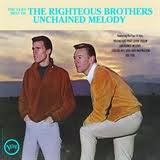
Bill Medley and Bobby Hatfield, The Righteous Brothers

Bill Medley and Bobby Hatfield, The Righteous Brothers

The powerful voices of Bill Medley and Bobby Hatfield, The Righteous Brothers, pound in my brain. “You’ve lost that lovin’ feeling, oh-oh-oh, that lovin’ feeling; Baby, you’ve lost that lovin’ feeling and it’s gone, gone, gone.”

Our small group has been reading Not a Fan: Becoming a Completely Committed Follower of Jesus by Kyle Idleman. In a chapter called Passionate Pursuit, he discusses a concept I haven’t heard for years–acedia. That’s a Latin word usually translated as sloth–one of the “seven deadly sins.”

Like Idleman, I pondered why “sloth” was one of those sins. It just didn’t seem to fit. Then I read the Desert Fathers writings and came across John Climacus (or St. John of the Ladder) who wrote The Ladder of Divine Ascent. This great book from the 7th century describes for the early monastic movement what emotions to overcome on your Divine ascent, and he devotes a lot of space to acedia (uh-see-dee-a).

You have been pursuing something with great passion. Your girl friend / boy friend. Your profession. Your sport. A deeper Spiritual life. You think you cannot live without the object of your pursuit.

Then, something happens. Usually a little at a time other cares start to impinge on your mind, emotions, energy. You don’t seem to care as much. Don’t devote so much time.

Then Bill and Bobby are singing your song–You’ve lost that loving feeling.

Passion is used often these days to describe oneself. Once in an editorial I wrote about being passionate about automation and manufacturing (I still am, by the way). A friend wrote that she is a “passionate communicator.” (and she is). So many people begin something with great passion and then wither–like the seeds scattered on thin soil that Jesus describes that sprout fast and then wither in the sun.

If you’ve lost that lovin’ feeling in your Spiritual quest, there are ways to get it back. You begin by getting back into the Spiritual Disciplines. Read The Bible or a devotional every day. Meditate and Pray every day. Worship and Celebrate with your Jesus-follower friends. Remember why you were first in love. Stir up the embers in the fireplace and add some new kindling. Get the fire roaring again.

How to Pray

February 17, 2011

How do you pray? What do you visualize, if anything? I think that it was Donald Miller who gave me the picture of God as some sort of giant vending machine. Put your request in, pick up the solution from the little tray at the bottom. Do you picture God as a giant Dad to whom you ask for the keys to the car so you can go out?

I have hit the sections on prayer in Julian’s Reflections and she has several meaningful observations. Like contemplatives before her (including Paul who talked about being one with Christ), she builds on her experiences and discusses prayer as union with God.

So, when you pray, are you just looking from a goody from the vending machine in the sky–or are you resting in the bosom of God. You can slow down, breathe, open yourself in trust to God, and let Him just infuse your being. Think rather than machine but a tea infusion that lets the tea totally mix with the hot water.

Sometimes we’re in a rush. We just need a friend to talk to. If you’re in a rush, that’s the best signal to slow down and take time with God. If you need a friend, that’s OK, just take the time to settle in with the friend–kind of like meeting your friend for coffee and taking a little time to connect before sharing all your problems.

Julian has another observation. When you pray, conform your soul to God. She says if you try to make God conform to your soul, it won’t work–because God is never changing. People of my generation in the US (called Boomers) have been great at trying to manipulate everything to conform to their wishes. I see people trying to conform God to their own ideas or wishes.

No, God is God. God is the creator, not the created. God existed before humans, and will exist after humans have disappeared. The best thing is to quit trying to make God into something and just rest in Him. In that way, the fruits of the Spirit will grow in your life and you’ll find true happiness.

Both-And Limitless Spirituality

February 13, 2011

Julian of Norwich had a vision on her deathbed. During the succeeding 20 years, she wrote the experience along with interpretation in her Reflections. Among her thoughts were the three I just discussed–seeking, waiting and trusting.

Psychologist (scientists of a sort), including Christian psychologists, tend to categorize dreams and visions as random firing of neurons in the brain–meaningless, just reflecting random past events in your life. Indeed, most of your dreams are probably just that.

On the other hand, a tremendous number of examples exist documenting a seemingly breakthrough of the spiritual world (a world rejected by materialists of all types) into a person’s life. The Bible documents many. Perhaps I’ve even experienced such an event.

So, is the spirit world just something that is made up in your head? Is the only reality the material world that we can describe?

I just finished reading a book on business strategy called “Both And.” Its premise asks why just limit yourself to one thing or the other, why not do both? As I’m reading Julian and thinking about modern psychologists, I find myself thinking that same thing.

I’m a trained scientist, love the scientific method, and recognize that the tools derived from scientific research have greatly improved the quality of our lives (there are side effects, but that’s for a later essay). But science works in a closed universe. There are too many variables to consider if there are multiple universes. I read once where Dallas Willard had developed a line of thought similar to what I’ve been thinking for years, so I don’t feel like I’m straying from logic.

If God created the universe, then He must be outside our universe. Given both of those propositions, then it stands to reason that God can intervene at times (note: I’m obviously not an 18th Century Deist, sorry if you are). Therefore the numinous dreams and visions that have occurred throughout the history of humans. It’s God reaching out to people–usually to people who were seeking, waiting and trusting. They are open to God and let Him in.

I don’t think that having a God vision is necessarily delusional, but I acknowledge that some people suffer from delusions. You can test a vision by comparing with the long history of God visions.

So, I think we can trust Julian (and others in the tradition) with their experiences and reflections on their experiences. Scientists are great within their closed systems, but typically their expertise does not include experience outside their systems.

Don’t get caught up in false either/or–either science or faith–discussions. Don’t let science shake your faith, but don’t disparage science when it sticks to what it knows.

Both-And–Seek God, Wait on His presence, Trust His coming.

Don’t Cheapen Your Faith in God

January 24, 2011

The bottle looks almost like that of the more popular dishwashing detergent. The price was great–much less than the competition. Must be a good buy, right? But then you notice that the dishes come out of the dishwasher with a grungy film.

Cheap doesn’t always win. Value is the ratio of the price to the quality.

I thought about this in relation to the faith that many people seem to exhibit. So, I was wondering–is your faith cheap? Or a value?

Sometimes I wonder if people get their faith from a cereal box. Or a bumper sticker slogan. Donald Miller in his book “Searching for God Knows What” talks about “propositional” Christianity. That is where someone’s faith consists of repeating short propositions that may or may not be actually based on the Bible.

Then again, sometimes I think that people think way too much about their faith. I was checking out a church’s Website to learn something about them. There was a very long page of “what we believe.” It’s well thought out, I guess, and quite comprehensive.

On the other hand, I’d be warmer toward that church if they had just said, “We’re a community of followers of Jesus trying to help each other live a life with-God.”

It’s easy, but cheap, to just memorize propositions. Not to mention that knowing more propositions than others can be a source of pride. It’s much harder and requires extra expenditure of effort and focus with a dash of humbleness to strive to live each moment with God. Man, sometimes I wish it were easy.

Make Yourself a Blank Slate

January 4, 2011

Jon Swanson posted a thought on Levite Chronicles that got me thinking. He was talking about giving a gift of blank paper and colored pencils and adding an note, “Sometimes the best gift is a blank slate.”

A new year is beginning. Think of yourself as a blank slate beginning the year. What will be written upon it? Will you control the pencil? Will you let Jesus fill your slate?


Pointing the Way to Advent

December 15, 2010

We just had to drive to Chicago for a holiday gathering of my company and then some meetings (for me) and shopping (for my wife). The trip was Tuesday just two days after a nasty snowstorm caused my daughter and her husband much stress and an extra two hours on their trip to the Chicago area on Sunday.

I was looking for guidance on the best route. I needed an authoritative voice with current information. So, I did what any self-respecting geek would do–I went online. My anticipation of a good trip was enhanced by knowing the correct route to avoid more snow.

The Jewish people had been living in anticipation of a new leader for hundreds of years. Yet, when he came, many missed it. But a group of scientist/philosophers (often called “wise men”) from another land read the signs, listened to the Spirit and followed the route laid out for them to the birth place.

A group of shepherds were open to the leading of God. When angels spoke to them, they were prepared. They listened, and then they acted. They also followed the route laid out for them to the birth place.

Where is God leading you this Advent? Are you reading the signs and listening to the Spirit?