Archive for the ‘Worship’ Category

The Glory of God Shone Brightly

December 23, 2014

Remember when Moses saw the glory of God? His face shone so brightly reflecting that glory that the Hebrews could not stand to see it. So they asked that Moses hide his face behind a veil.

The Glory of God was said to inhabit the Ark for years. At some point, evidently, the glory sort of faded away.

Solomon built a Temple so that the Glory of God could “rest”, that is inhabit, with the people. It was said that God’s Glory filled the Temple.

If there is one overarching theme to the Old Testament, it is that the people of God draw close to God and then abandon Him. This theme recurs often continuing over centuries.

Then with the destruction of the Temple by the Babylonians and the second major exile of the Jewish people, God’s Glory was withdrawn from the land. Even with the building of the second Temple, there is no talk of God coming to dwell in it. This temple was not built with God’s blessing and instruction.

The conclusion of that cycle of glory and disengagement ended when God decided to “build” His own Temple. He revealed His glory, not through a stone building, but through a human being–Jesus of Nazareth.

Paul even calls our own bodies temples of God’s Spirit. That was, and is, a pretty radical statement. No wonder the Jews at the time beat him and stoned him.

Even so, we celebrate the return of the Glory of God to Earth at this time of the year. We participated in a wonderful celebration of the Advent Sunday with music, story, sharing.

Merry Christmas.

Paul Wants Unity Among Christians First

October 20, 2014

“For you were called to freedom, brothers and sisters; only do not use your freedom as an opportunity for self-indulgence, but through love become slaves to one another. 14 For the whole law is summed up in a single commandment, “You shall love your neighbor as yourself.” 15 If, however, you bite and devour one another, take care that you are not consumed by one another.” Galatians 5

For some reason I’ll not understand, I woke up this morning thinking about this play on words–we Americans, we might live in the “United States”, but we’re not very united on much of anything.

In my study of Paul, I’ve been reading about how much Paul wanted his small groups he called ekklesia to be united in spirit. He wrote so much about that. About the hands and feet not battling each other, or the eyes and ears not trying to dominate each other in the body of Jesus.

Now he was writing to groups of maybe 10-15. They weren’t going to gather 500 in a house. Besides, if they did, the Romans would have pounced immediately.

But even these groups were in danger of splitting. A new person would come to town. Charismatic, with new ideas. Called Paul “out of it.”

People would gather for a holy meal in a somewhat small room (at least by contemporary American standards), yet would have all manner of problems–the wealthy wanting to go first, separating into smaller sub-groups according to wealth or status of one sort or another.

I remember talking with a woman about church many years ago. “Oh, I could never go to your church. The people are too wealth. They’d never accept me.”

But even more–instead of gathering to worship and praise God and care for one another, we criticize and gossip and break into groups. Leaders stop leading caring for other things. Or just their own status.

We think it’s freedom to go our own way. Do our own thing as we said in the late 60s never thinking about how that would go on to corrupt our society.

Freedom, Paul says, is the ability to serve others. Don’t use freedom for self-indulgence. Use it to bring others into the group. To care for those in the group. To worship God with prayer and song and teaching.

Our Body as a Temple

February 18, 2014

I grew up in a German community in rural west central Ohio. Although by my mom’s generation, speaking the language was beginning to die out. My mom was from a “mixed” marriage–a German-speaking Alsatian and a woman of Welsh heritage. I don’t believe she ever spoke German.

But, I heard German spoken around town as a kid. We picked up words. But the words had no emotional impact. I learned later, much to my embarrassment during my first trip to Germany, that some of the words had great emotional impact. Sort of like dropping the “F-bomb” in church.

From that lesson, I learned that while reading the Bible or other works in translation I should try to be aware of the emotional impact of words on the first readers even when the emotional impact in me is slight.

John places the story of Jesus cleansing the Temple early in his Gospel. John transitions from a story about keeping the Temple–an emotion-laden word–pure to talking about the Temple as Jesus’ body.

Paul, writing to the church in Corinth, takes this concept (realizing he probably never read the Gospel of John, but he no doubt knew John and talked with him) further and talked about our bodies as the Temple of the Holy Spirit.

Paul talked about what goes into and what comes out of our bodies. He talked about the proper use of our bodies.

I’m like most of the people in America, I suppose. I keep saying I need to lose 10 lbs. But really what I wind up doing is maintaining my 175 plus or minus 5. I really should be 165 for my 5’10” frame.

So, while saying one thing, I’ll watch some sporting event on TV on Sunday afternoon and eat a bag of potato chips. Or order the big meal on a business trip. And convince myself I’m tired and cut my workout short.

There are others who do much worse. Sex with the wrong people. Greatly overeating. Drugs. Too much wine.

It is good to make the link back from our obsession with looks to Paul’s analogy of the Temple to John’s use of the word relative to Jesus’ body to Temple as the place to worship God. Our bodies are where we actually house the Spirit and worship God. Let’s keep it clean.

Experience God or Believe in God

January 14, 2014

Belief? Or experience?

I was brought up to believe in God. This word, belief, has long puzzled me. It means something like having confidence that something is true or something exists even though there is no empirical evidence that it is, indeed, true.

Faith also seems to me to be similar to belief.

I struggle with these words. They seem lacking. Not descriptive enough. What do you mean that you don’t know that God exists?

Do you ever wonder about this? Or wonder if God is real?

There is a group or community of people who have ecstatic experiences of the Spirit. We call them pentacostal or maybe other terms. I am not one, quite, but I know many. This is experiential worship. But many people are just not the right personality type for ecstatic worship.

I could say that I believe that people can experience God. But that sounds like a contradiction.

So, I’ve thought about all this for many years.

Then about 30 years ago, when I discovered that people really exist (as a science/engineering personality type, I was lost in a world of ideas for most of my early life), I started reading psychology. A lot. Freud. James, John Climacus. Jung.

Finally, an observation that seemed to fit my thinking as well as my experiences. Carl Jung, toward the end of his life of deep exploration of the psyche, was asked if he believed in God. “Believe?” he answered, “no, I don’t believe. I know.”

Pondering visionary experiences of God while contemplating John’s Revelation, brought back memories of my experiences. Yes, I know. God’s beyond belief. God is real.

Modern psychologists or English professors or the like would say that I am merely delusional. But they say that because they do not know! It’s not belief. I know God is with me.

Make Rules or Make Disciples

September 23, 2013
Division like fractals

Mandelbrot fractal image. From Wikipedia.org

We took a vacation last week. My wife’s family gathering. We worshiped in a church of a different denomination than the one we attend. It’s a southern-based, conservative off-shoot of another denomination.

Reminded me of the years I taught a course on American Baptist history. How there was Roger Williams, then Northern Baptists (now American Baptists) and Southern Baptists. And then they split like fractals.

Sometimes these divisions are based on worship style. Some like the solemnity and mystery of high Mass. Others prefer jeans and T-shirts, guitars and drums, hands waving in the air celebration. As for me, I like almost any of the styles.

Most of the divisions are created by rules. We created organizations called churches or denominations. They had to have rules. Then someone said, “I don’t like your rules. I want to make up my own rules.” And off they went. We still do that today.

It is as if Jesus said, “All power in heaven and earth has been granted to me. Go, therefore, and make organizations with individual rule sets around the world so that you can worship God with those with whom you agree.”

But, wait, Jesus didn’t say that. He never spoke about organizations other than to point out the problems with the one religious organization he knew–the Temple worship cult. And he didn’t like it.

What he said was, “Go…and make disciples. Teaching them what I have taught you.” Making disciples–that’s a one-to-one thing. Not a political thing. You model Jesus so that others can model Jesus by modeling you. It’ not rocket science. But, it requires intentional living.

And the organization thing–that’s a human condition. How many divisions of Judaism are there? Islam? Buddhism? Hinduism?

It’s time to focus on the Lord who showed the way. Not on divisions. Divisions detract us from placing our entire attention on God.

Having the Right Heart and Attitude

August 29, 2013

Isaiah is almost sarcastic at the beginning of Chapter 58:

Yet day after day they seek me

and delight to know my ways,

as if they were a nation that practiced righteousness

and did not forsake the ordinance of their God;

they ask of me righteous judgments,

they delight to draw near to God.”

I added the italics on “as if.” That phrase reveals the points to come. The people say they seek God, but there is something wrong. Wonder what it is?

“Why do we fast, but you do not see?

Why humble ourselves, but you do not notice?”

So the people are also asking of God what’s wrong. In our terms they are saying, “We go to church. We donated to the church. Why does it seem that you are against us?”

Look, you serve your own interest on your fast day,

and oppress all your workers.

Ah, now we have reached the point that God charges against them. Two points really. First, when they “fast” or worship, their attention is not on God. It is on themselves. They fast only to serve their own interests. Then look at the last phrase. We’ll study more on that later. I don’t think I’ve ever seen a spiritual teaching that does not also include a moral teaching–a teaching on the way we treat other people. Those seem to go hand-in-hand.

“What is the greatest commandment?” asked the teacher to the Teacher. Jesus replied with the Shema about worshiping the Lord. Then he said that the second commandment was as important as the first–to love your neighbor as yourself.

These people were thinking of ways to take advantage of people in their community even while worshiping God. This is abhorrent to God, the God who wanted to build a community focused on Him.

When I teach the Spiritual Disciplines, I always begin with the proper attitude. Simply practicing the Disciplines will do you little good. It begins with the right attitude.

Same with leadership. Beware this judgement of Isaiah in your practice of leadership. Take care of your attitude.

Lost That Loving Feeling

August 12, 2013
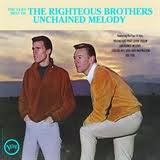
Bill Medley and Bobby Hatfield, The Righteous Brothers

Bill Medley and Bobby Hatfield, The Righteous Brothers

The powerful voices of Bill Medley and Bobby Hatfield, The Righteous Brothers, pound in my brain. “You’ve lost that lovin’ feeling, oh-oh-oh, that lovin’ feeling; Baby, you’ve lost that lovin’ feeling and it’s gone, gone, gone.”

Our small group has been reading Not a Fan: Becoming a Completely Committed Follower of Jesus by Kyle Idleman. In a chapter called Passionate Pursuit, he discusses a concept I haven’t heard for years–acedia. That’s a Latin word usually translated as sloth–one of the “seven deadly sins.”

Like Idleman, I pondered why “sloth” was one of those sins. It just didn’t seem to fit. Then I read the Desert Fathers writings and came across John Climacus (or St. John of the Ladder) who wrote The Ladder of Divine Ascent. This great book from the 7th century describes for the early monastic movement what emotions to overcome on your Divine ascent, and he devotes a lot of space to acedia (uh-see-dee-a).

You have been pursuing something with great passion. Your girl friend / boy friend. Your profession. Your sport. A deeper Spiritual life. You think you cannot live without the object of your pursuit.

Then, something happens. Usually a little at a time other cares start to impinge on your mind, emotions, energy. You don’t seem to care as much. Don’t devote so much time.

Then Bill and Bobby are singing your song–You’ve lost that loving feeling.

Passion is used often these days to describe oneself. Once in an editorial I wrote about being passionate about automation and manufacturing (I still am, by the way). A friend wrote that she is a “passionate communicator.” (and she is). So many people begin something with great passion and then wither–like the seeds scattered on thin soil that Jesus describes that sprout fast and then wither in the sun.

If you’ve lost that lovin’ feeling in your Spiritual quest, there are ways to get it back. You begin by getting back into the Spiritual Disciplines. Read The Bible or a devotional every day. Meditate and Pray every day. Worship and Celebrate with your Jesus-follower friends. Remember why you were first in love. Stir up the embers in the fireplace and add some new kindling. Get the fire roaring again.

Introverts and Extroverts

April 12, 2012

There are two types of people. Well, maybe three. There are people who get energy from being with other people. We call those extroverts. There are people who get energy from being alone. These are called introverts. Then there are people like me, I suppose. On the Myers-Briggs Types Indicator, my scores on that scale come back ambivalent.

But how we are determines how we like to worship. It determines how we work best. But we need a little of both.

A man called Chris Anderson started a conference years ago where he invited people with significant ideas to present short talks (no longer than 20 minutes but most often about 10 minutes) to an audience who paid as much as five figures to the left of the decimal point to listen. He called it the TED Talks conference. It became successful. There are now many of these around the world. He now records them and you can watch for free.

Recently Susan Cain presented on being an introvert in a culture that increasingly rewards (or forces you to be) an extrovert. It is worth a listen.

In our spiritual practice, we need to be aware of our tendency and seek balance. Introverts would tend toward study and meditation. Extroverts tend toward worship, celebration and service. Following the example of Jesus, everyone needs time alone to find God and center themselves. It might be difficult for extroverts, but it is necessary to achieve depth in your celebrations and service. Study and meditation alone will not make you whole. Introverts need to get out and be with people. Learn to celebrate and serve. Just as Jesus often withdrew to be with God in order to serve more, we also need to seek that balance.

The Lord Hates Your Worship

March 14, 2011

How many times have I read that in the Bible? People worshiped. They gathered according to custom. They gave offerings according to their custom. They developed laws to explain how to obey the 10 “Commandments” that sealed the covenant with God. Then they tried to obey those laws.

But God said time after time that the odors of the sacrifices were a stench in His nostrils.

We gather together. We sing. We pray together. We worship according to our customs. What does God think?

Maybe I’m rushed. In a hurry to get there. In a hurry to get somewhere else. Maybe I’m distracted by worries at work. Or worries because I have no work. Or by the woman (or man) across the aisle. Or maybe because the pastor has a flap of his coat pocket accidentally tucked into the pocket.

Maybe God just doesn’t seem real to me today.

Maybe God won’t accept my worship today.

Maybe it’s time to slow down. Take a deep breath. Read a Psalm. Focus on God–and leave all the distractions behind.

Maybe then he’ll honor my worship.